
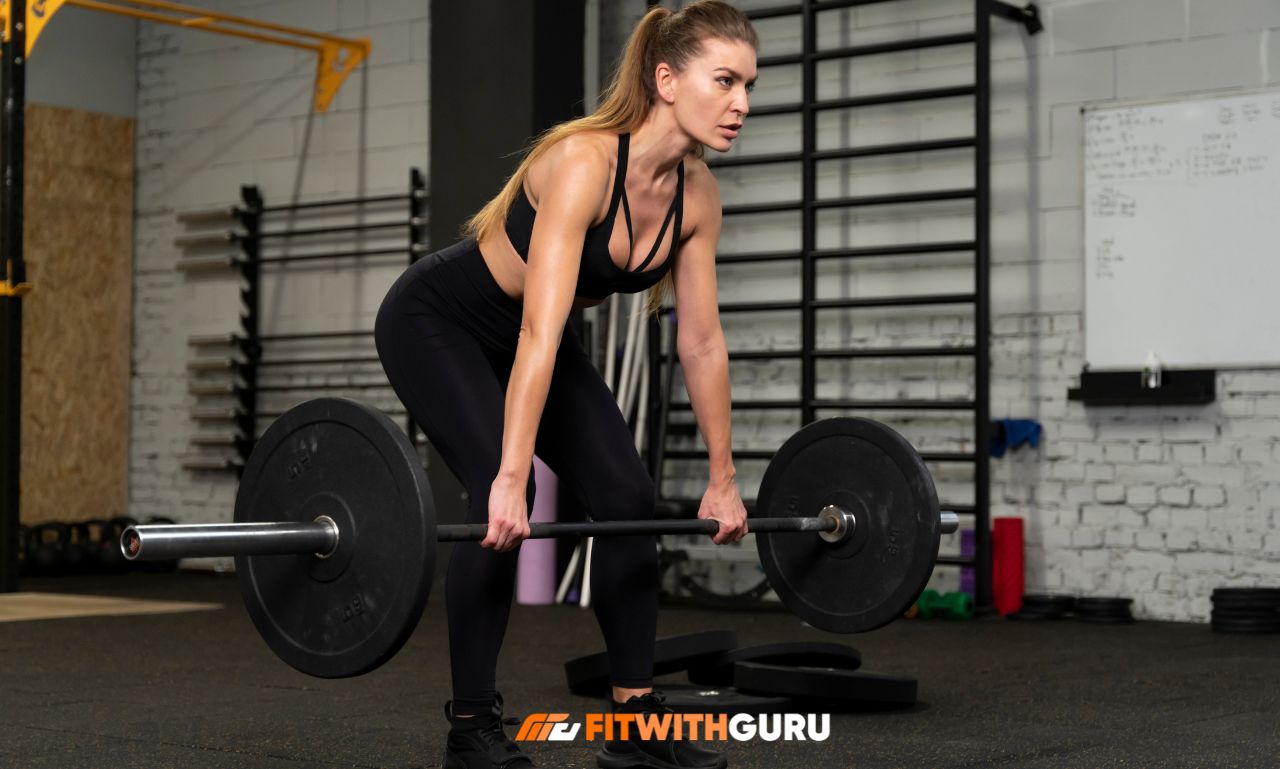
Barbell exercises for women have emerged as one of the most effective ways to build lean muscle, boost metabolism, and transform overall body composition.
Modern fitness science confirms that barbell training helps women develop functional strength, improve bone density, and sculpt a toned physique that cardio alone simply cannot achieve.
Whether you’re working out at a commercial gym or exploring barbell exercises for women at home, incorporating these compound movements into your routine delivers impressive results that extend far beyond physical appearance.
Understanding the Benefits of Barbell Training for Women
Barbell exercises offer unique advantages that dumbbells and machines simply cannot replicate for female fitness enthusiasts.
The bilateral nature of barbell movements forces both sides of your body to work together, creating balanced strength development and improved coordination.
When you perform barbell exercises for women at home or in the gym, you engage multiple muscle groups simultaneously, making your workouts incredibly time-efficient.
Studies indicate that compound barbell movements trigger a significant hormonal response, releasing growth hormone in amounts that promote muscle development without causing masculine features.
Women naturally have lower testosterone levels than men, which means building excessive muscle mass is physiologically complex regardless of how heavy you lift.
Barbell training strengthens connective tissues, tendons, and ligaments, reducing injury risk during daily activities and other sports.
The progressive overload principle—gradually increasing the weight you lift—ensures continuous improvement and prevents fitness plateaus.
Bone density improvements from barbell training are particularly crucial for women, who face a higher risk of osteoporosis as they age.
Essential Equipment and Safety Considerations
Before diving into specific exercises, understanding proper equipment and safety protocols ensures a productive and injury-free training experience.
A standard Olympic barbell weighs 45 pounds (20 kg), though lighter training bars weighing 15-35 pounds are excellent options for beginners.
When setting up barbell exercises for women at home, invest in a quality squat rack or power cage with safety bars that catch the weight if you fail a repetition.
Rubber bumper plates protect your floors and allow you to safely drop the barbell during certain exercises.
Proper footwear matters tremendously—choose flat-soled shoes or dedicated weightlifting shoes rather than cushioned running sneakers that compromise stability.
Always warm up with dynamic stretches and lighter weight sets before attempting your working weight to prepare your muscles and nervous system.
1. Barbell Squat: The Foundation of Lower Body Strength
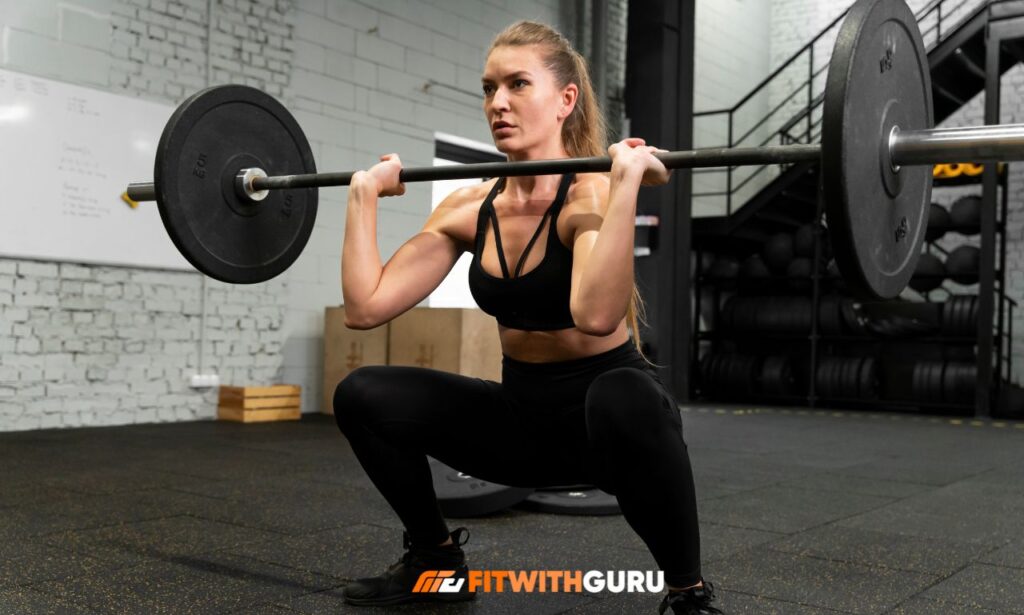
The barbell squat reigns as the queen of lower-body exercises, targeting your quadriceps, glutes, hamstrings, and core simultaneously.
This compound movement builds functional strength that translates directly to everyday activities like climbing stairs, picking up children, or carrying groceries.
For women specifically, squats develop the glutes better than almost any other exercise, creating the desired lifted, sculpted appearance.
How to Perform the Barbell Squat:
- Position the barbell across your upper traps, gripping it firmly outside shoulder width.
- Step back from the rack with feet shoulder-width apart, toes slightly angled outward.
- Engage your core and maintain a neutral spine with chest lifted throughout the movement.
- Initiate the descent by pushing your hips back while simultaneously bending your knees.
- Lower yourself until your hip crease drops below your knee level. Drive through your entire foot, pushing the floor away to return to the standing position.
- Keep your elbows pulled down and back to maintain a tight upper back. Breathe in during the descent and forcefully exhale during the ascent.
A barbell workout for female beginners should start with just the empty bar, focusing exclusively on technique before adding weight plates.
Common mistakes include allowing knees to cave inward, rounding the lower back, or shifting weight onto the toes rather than keeping it balanced throughout the foot.
2. Barbell Deadlift: Full-Body Power Development
The barbell deadlift is the most comprehensive strength-building exercise for women, engaging virtually every muscle group.
This primal movement pattern strengthens your posterior chain—the muscles along the back of your body from your neck to your heels.
Deadlifts build exceptional grip strength, core stability, and mental toughness that carries over into every aspect of physical performance.
How to Perform the Barbell Deadlift:
- Stand with feet hip-width apart, with the barbell positioned over the middle of your feet.
- Bend at the hips and knees to grip the bar just outside your legs. Drop your hips slightly, lift your chest, and tense your body.
- Drive through your heels while simultaneously extending your hips and knees. Keep the barbell path vertical and as close to your body as possible.
- Stand fully upright at the top, squeezing your glutes without hyperextending. Reverse the movement by pushing your hips back first, then bending your knees. Control the descent, but don’t slow it excessively.
Barbell exercises for women at home require proper flooring protection for deadlifts, as the controlled drop at the end of each repetition creates significant impact.
Many women find that a mixed grip or hook grip improves their grip strength during heavier sets.
3. Barbell Hip Thrust: Maximum Glute Activation
The barbell hip thrust has exploded in popularity among women seeking to develop strong, shapely glutes with targeted precision.
Research shows that hip thrusts activate the glutes more effectively than squats or deadlifts, making them indispensable for lower-body development.
How to Perform the Barbell Hip Thrust:
- Sit on the floor with your upper back against a bench, knees bent, and feet flat.
- Roll a padded barbell over your legs until it rests in the crease of your hips. Position feet flat on the floor approximately shoulder-width apart.
- Drive through your heels, extending your hips until your body forms a straight line. Squeeze your glutes hard at the top position, maintaining a neutral spine.
- Hold the peak contraction for one second before lowering with control. Keep your chin tucked and ribs down to prevent arching your lower back.
A barbell pad or folded yoga mat provides essential cushioning between the bar and your hip bones, preventing painful bruising.
4. Barbell Bench Press: Upper Body Strength and Definition
The barbell bench press develops the chest, shoulders, and triceps while building upper body pushing strength that benefits numerous daily activities.
Women often neglect upper body training, but balanced strength development prevents muscular imbalances and improves overall functional capacity.
How to Perform the Barbell Bench Press:
- Lie on a flat bench with eyes positioned directly under the barbell. Plant your feet firmly on the floor, creating a slight arch in your lower back.
- Grip the barbell slightly wider than shoulder-width. Unrack the weight and position it over your chest with arms fully extended.
- Lower the barbell in a controlled manner to your mid-chest.
- Touch the bar lightly to your chest without bouncing. Press the weight back up by driving forcefully through your hands. Lock out your elbows at the top without hyperextending.
Barbell exercises for women at home require either a quality bench with safety catches or a training partner to spot heavy lifts.
5. Barbell Bent-Over Row: Building a Strong, Sculpted Back
The barbell bent-over row develops the entire back musculature, improves posture, and creates that coveted V-taper appearance.
Strong back muscles balance out chest and shoulder development, preventing the rounded-forward posture common in modern desk-bound lifestyles.
How to Perform the Barbell Bent-Over Row:
- Stand with feet hip-width apart, with the barbell positioned over the middle of your feet. • Hinge at the hips with a slight knee bend, maintaining a neutral spine.
- Grip the barbell with your hands just outside shoulder width. Engage your core and pull your shoulder blades back and down.
- Row the barbell toward your lower ribcage by driving your elbows back.
- Squeeze your shoulder blades together at the top of the movement. Lower the weight with control, maintaining tension in your back muscles.
A barbell workout for female beginners might substitute dumbbell rows initially to master the hip hinge pattern before progressing to the barbell variation.
6. Barbell Overhead Press: Shoulder Strength and Stability
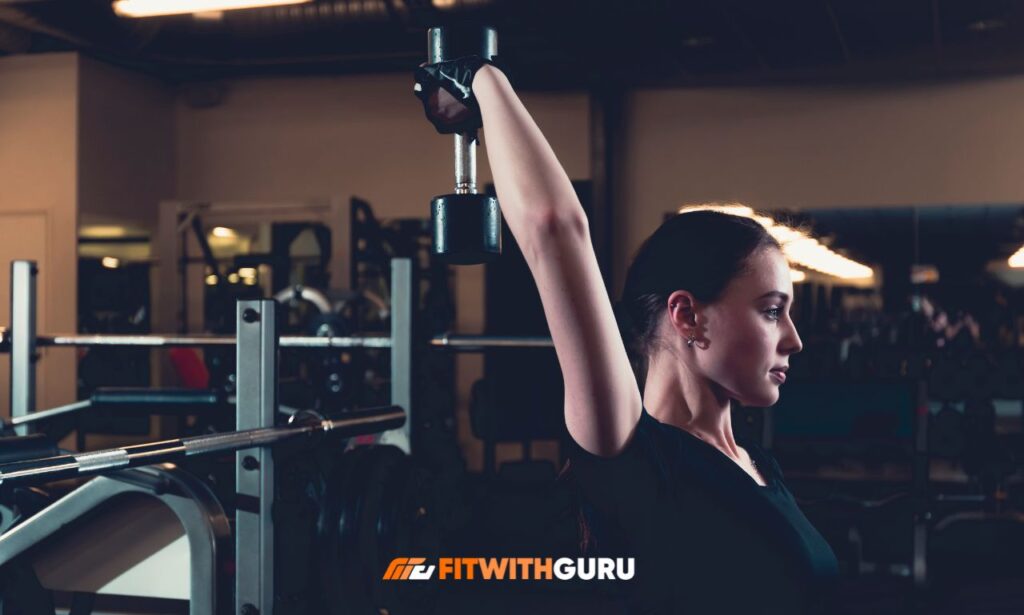
The barbell overhead press builds powerful, defined shoulders while developing core stability and full-body coordination.
This fundamental pressing movement requires significant core engagement to prevent excessive back arching as you push weight overhead.
How to Perform the Barbell Overhead Press:
- Stand with feet hip-width apart, barbell resting on your upper chest. Grip the bar just outside shoulder width with wrists stacked over elbows.
- Engage your core, squeeze your glutes, and create full-body tension. Drive the barbell straight up, moving your head slightly back to clear the bar path.
- Lock out your elbows overhead with the barbell positioned directly over your midfoot.
- Lower the weight with control back to the starting position. Keep your ribs down and avoid excessive back arching.
Barbell exercises for women at home can be performed safely with overhead pressing, provided you have adequate clearance from the ceiling.
Creating Your Effective Barbell Training Program
Designing an intelligent training program ensures you maximize results while allowing adequate recovery between sessions.
A balanced approach for beginners involves training 3 days per week and performing full-body workouts that include 3-4 of these barbell exercises per session.
Progressive overload remains the foundation of continued improvement—aim to add small amounts of weight or additional repetitions each week.
Most women achieve excellent results by performing 3-4 sets of 6-12 repetitions for each exercise, adjusting the number of sets and repetitions based on individual goals and recovery capacity.
Adequate rest between sets matters tremendously—take 2-3 minutes between heavy compound movements to ensure quality performance on subsequent sets.
Nutrition plays an equally important role as training itself, with sufficient protein intake supporting muscle recovery and growth.
Tracking your workouts in a training log or app helps identify progress patterns and ensures you’re consistently challenging yourself appropriately.
Frequently Asked Questions
Will barbell exercises make me bulky?
No, barbell exercises for women will not make you bulky because women produce far less testosterone than men, making significant muscle mass extremely difficult to build.
Lifting heavy weights increases muscle density and reduces body fat percentage, creating defined, athletic curves rather than bulk.
Most women find that barbell training creates exactly the strong, feminine physique they desire without any excessive size.
How heavy should I lift as a beginner?
A barbell workout for female beginners should start with weights that allow you to complete all prescribed repetitions with excellent form while feeling challenged on the final few reps.
This typically means beginning with just the empty 45-pound Olympic bar or even lighter training bars for overhead movements.
Your focus during the first 4-6 weeks should prioritize movement quality over weight lifted, establishing proper technique before progressively adding plates.
Can I do barbell exercises effectively at home?
Yes, barbell exercises for women at home can be extremely effective with minimal equipment investment and proper space setup.
Essential equipment includes an Olympic barbell, weight plates, a squat rack with safety bars, and rubber flooring or mats to protect your floor.
The main advantage of home training is convenience and time savings, eliminating commute time and allowing you to train on your own schedule.
How quickly will I see results from barbell training?
Most women notice significant strength improvements within 3-4 weeks of consistent barbell training, though visible physique changes typically emerge after 8-12 weeks.
Neural adaptations occur first, meaning your nervous system becomes more efficient at recruiting muscle fibers, producing rapid strength gains initially.
Progress photos taken every 4 weeks provide a more accurate assessment than daily mirror checks, which often fail to reveal gradual improvements.
Should I do cardio along with barbell training?
Strategic cardio inclusion complements barbell exercises for women without interfering with strength development when programmed intelligently.
Low-intensity steady-state cardio on rest days enhances recovery by increasing blood flow without creating additional stress.
Prioritize your barbell training as the foundation of your program, using cardio as a supplementary tool for cardiovascular health and additional calorie expenditure if needed.
Conclusion
Barbell exercises for women are the most efficient way to build functional strength, improve body composition, and develop lasting confidence.
The 6 movements outlined in this guide provide a comprehensive foundation for total-body transformation when performed consistently with proper technique.
Whether you’re exploring barbell exercises for women at home or training in a commercial facility, these fundamental patterns deliver unmatched results.
Start your barbell training journey today at FitWithGuru, where strength meets transformation.
