
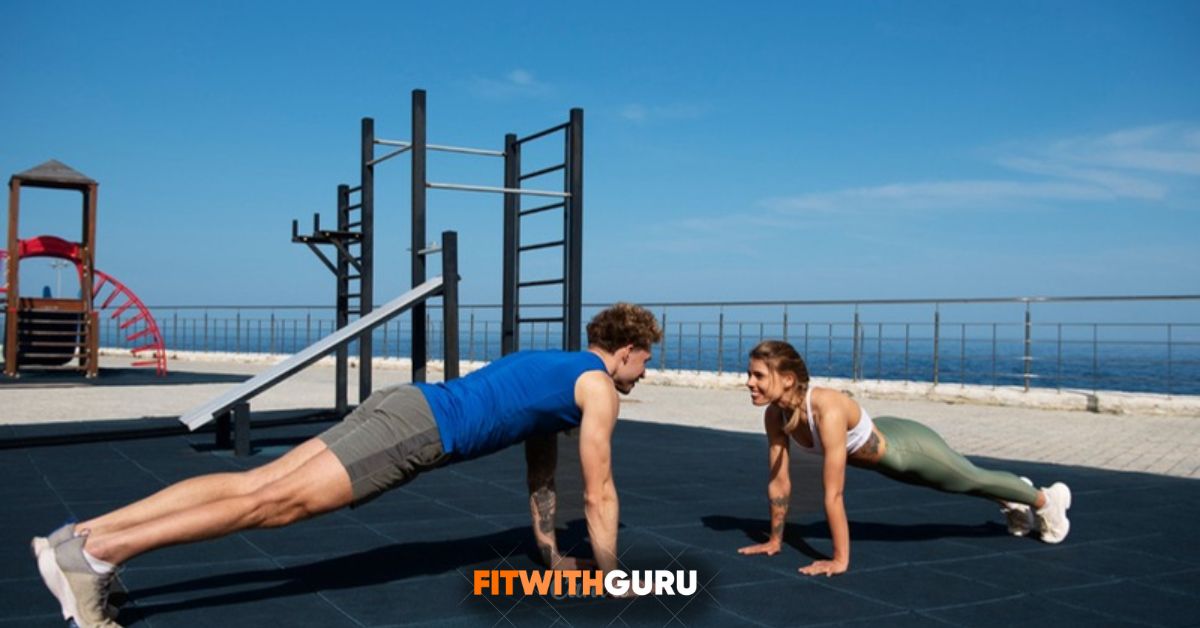
A calisthenics workout plan free of charge is one of the most accessible and effective ways to transform your body using nothing but your own bodyweight.
Whether you’re a beginner or an experienced athlete, calisthenics offers a proven path to building strength, flexibility, and endurance without spending money on gym memberships or expensive equipment.
Why Choose a Free Calisthenics Workout Plan?
Choosing a calisthenics workout plan over traditional gym routines comes with numerous advantages that extend far beyond just saving money.
Bodyweight exercises teach you to master your own body through functional movements that translate directly to real-world activities and everyday tasks.
Unlike machines that isolate specific muscles, calisthenics engages multiple muscle groups simultaneously, creating balanced strength development and improved coordination.
The financial barrier to entry is essentially zero—no monthly membership fees, no equipment purchases, and no expensive personal training sessions required.
You gain complete freedom to train on your own schedule, whether that’s early morning in your bedroom, during lunch break at a local park, or late evening in your living room.
Calisthenics also scales infinitely with your fitness level, from simple wall push-ups for absolute beginners to advanced movements like muscle-ups and planche holds for seasoned athletes.
Understanding the Fundamentals of Calisthenics Training
Before diving into your calisthenics workout plan free program, it’s essential to understand the core principles that make bodyweight training so effective.
Calisthenics revolves around six fundamental movement patterns: push, pull, squat, hinge, core stabilization, and locomotion.
The push pattern includes exercises such as push-ups, dips, and handstand variations that primarily target your chest, shoulders, and triceps.
Pull movements such as pull-ups, rows, and chin-ups target your back muscles, biceps, and rear deltoids while building grip strength.
Squatting and hinging patterns develop lower-body power through exercises such as squats, lunges, pistol squats, and single-leg deadlifts.
Core stabilization exercises including planks, hollow holds, and leg raises, create the foundation for all advanced calisthenics movements.
The Ultimate Free Calisthenics Workout Plan for Beginners
This beginner-friendly calisthenics workout plan is designed for three training sessions per week with at least one rest day between workouts.
Workout A: Upper Body Push Focus
Incline Push-Ups (3 sets of 8-12 reps)
- Find a sturdy elevated surface like a bench, table, or sturdy chair
- Place your hands shoulder-width apart on the surface
- Keep your body in a straight line from head to heels
- Lower your chest toward the surface by bending your elbows
- Push back up to the starting position with control
Pike Push-Ups (3 sets of 6-10 reps)
- Start in a downward dog position with hips raised high
- Keep your legs relatively straight and your hands shoulder-width apart
- Lower your head toward the ground by bending your elbows
- Press back up to the starting position
- Focus on keeping your core engaged throughout the movement
Tricep Dips on Chair (3 sets of 8-12 reps)
- Sit on the edge of a sturdy chair with your hands gripping the edge
- Slide your bottom off the chair, supporting your weight with your arms
- Lower your body by bending your elbows to about 90 degrees
- Push back up to straighten your arms
- Keep your back close to the chair throughout the movement
Plank Hold (3 sets of 20-45 seconds)
- Position yourself on your forearms and toes
- Maintain a straight line from head to heels
- Engage your core and squeeze your glutes
- Avoid letting your hips sag or pike up
- Breathe steadily throughout the hold
Workout B: Lower Body and Core Focus
Bodyweight Squats (3 sets of 12-15 reps)
- Stand with feet shoulder-width apart and toes slightly turned out
- Lower your body by bending your knees and pushing your hips back
- Keep your chest up and core engaged throughout
- Descend until your thighs are parallel to the ground
- Drive through your heels to return to standing
Alternating Lunges (3 sets of 10 reps per leg)
- Stand tall with feet hip-width apart
- Step forward with one leg and lower your back knee toward the ground
- Keep your front knee aligned over your ankle
- Push through your front heel to return to starting position
- Alternate legs with each repetition
Glute Bridges (3 sets of 15-20 reps)
- Lie on your back with knees bent and feet flat on the ground
- Place your arms at your sides for stability
- Push through your heels to lift your hips toward the ceiling
- Squeeze your glutes at the top of the movement
- Lower back down with control
Bicycle Crunches (3 sets of 15 reps per side)
- Lie on your back with hands behind your head
- Lift your shoulders off the ground and raise your knees
- Bring your right elbow toward your left knee while extending your right leg
- Alternate sides in a pedaling motion
- Focus on rotating your torso rather than pulling on your neck
Workout C: Upper Body Pull and Full Body
Australian Rows (3 sets of 8-12 reps)
- Find a sturdy horizontal bar or table edge at waist height
- Lie underneath and grip the bar with your hands shoulder-width apart
- Keep your body straight from head to heels
- Pull your chest toward the bar by squeezing your shoulder blades together
- Lower back down with control
Wall-Assisted Pull-Up Negatives (3 sets of 3-5 reps)
- Use a chair to help you reach the top position of a pull-up
- Grip the bar with palms facing away from you
- Step off the chair and lower yourself down as slowly as possible
- Focus on controlling the descent for 3-5 seconds
- Use the chair to return to the top position and repeat
Superman Hold (3 sets of 15-30 seconds)
- Lie face down on the ground with arms extended overhead
- Simultaneously lift your arms, chest, and legs off the ground
- Hold this position while squeezing your lower back and glutes
- Keep your neck in a neutral position
- Lower back down with control
Mountain Climbers (3 sets of 20 reps total)
- Start in a high plank position with hands under shoulders
- Drive one knee toward your chest
- Quickly switch legs in a running motion
- Keep your core tight and hips level
- Maintain a steady rhythm throughout
Intermediate Calisthenics Workout Plan Free Schedule
Once you’ve mastered the beginner routine for 8-12 weeks, it’s time to progress to more challenging variations in your calisthenics workout plan.
The intermediate program increases training frequency to four days per week with an upper/lower split that allows for better recovery and muscle development.
This phase introduces more advanced progressions like regular push-ups, close-grip variations, Bulgarian split squats, and full pull-ups if you’ve developed sufficient strength.
You’ll also incorporate tempo training, where you slow down the eccentric (lowering) phase of exercises to 3-4 seconds, dramatically increasing time under tension.
Isometric holds become more prevalent, with exercises like L-sits, hollow body holds, and static lunge positions building incredible core strength and stability.
Progressive overload continues through adding repetitions, sets, or advancing to the next exercise variation in the progression chain.
Advanced Free Calisthenics Workout Plan Progressions
Advanced practitioners of a calisthenics workout plan free program work toward skill-based movements that demonstrate exceptional strength and body control.
These movements include handstand push-ups, muscle-ups, one-arm push-up variations, pistol squats, front levers, and human flag progressions.
Training at this level requires dedicated skill practice sessions where you work on specific movement patterns with fresh muscles and full neurological capacity.
A typical advanced week includes 20-30 minutes of skill work at the beginning of training sessions, followed by strength work targeting similar muscle groups.
Weighted calisthenics can be achieved by using a backpack filled with books or water bottles to add external resistance while maintaining bodyweight movement patterns.
Creating Your Optimal Calisthenics Training Environment
The beauty of a calisthenics workout plan is that you need minimal space and equipment to achieve outstanding results.
For home training, you’ll want a clear space of about 6 feet by 6 feet where you can move freely without obstacles or hazards.
A pull-up bar is the single most valuable investment for calisthenics, available as doorway-mounted, wall-mounted, or freestanding options at various price points.
Parallel bars or dip stations significantly expand your exercise options, though chairs, countertops, or playground equipment can serve as free alternatives.
Outdoor training at local parks with fitness equipment, playgrounds, or even just open grass areas offers variety and fresh air to complement home workouts.
Many cities now feature dedicated calisthenics parks with specialized equipment designed specifically for bodyweight training enthusiasts.
Nutrition Strategies to Maximize Your Calisthenics Results
Your calisthenics workout plan free program will deliver optimal results only when paired with proper nutrition that supports your training goals.
Protein intake should range from 0.7 to 1 gram per pound of bodyweight daily to support muscle recovery and growth from your training sessions.
Carbohydrates provide the energy necessary for high-quality training sessions, with needs varying based on training volume, intensity, and individual metabolism.
Healthy fats from sources like nuts, avocados, olive oil, and fatty fish support hormone production and overall health while providing concentrated energy.
Hydration often gets overlooked but remains critical for performance, recovery, and every metabolic process your body performs during training adaptations.
Common Mistakes to Avoid in Your Free Calisthenics Journey
Many beginners starting a calisthenics workout plan make preventable mistakes that slow their progress or lead to frustration and injury.
The most common error is progressing too quickly to advanced variations before mastering foundational movement patterns with proper form and control.
Neglecting proper warm-up routines increases injury risk, particularly for shoulders, elbows, and wrists that bear significant loads during bodyweight exercises.
Training too frequently without adequate recovery time prevents adaptation and can lead to overtraining symptoms like persistent fatigue and decreased performance.
Focusing exclusively on pushing exercises while neglecting pulling movements creates muscular imbalances that contribute to poor posture and shoulder problems.
Many practitioners skip leg training entirely because upper-body skills seem more impressive, but balanced development requires consistent lower-body work.
Poor form sacrificed for higher repetition numbers undermines the effectiveness of your training and significantly increases injury risk over time.

Frequently Asked Questions
How long does it take to see results from a free calisthenics workout plan?
Most people notice initial strength improvements within 2-3 weeks as neuromuscular adaptations enhance coordination and muscle activation patterns.
Visible physical changes typically emerge around the 4-6 week mark as consistent training begins to build muscle and reduce body fat.
Significant transformations generally require 12-16 weeks of dedicated training combined with proper nutrition and adequate recovery.
Can I build muscle with just calisthenics without weights?
Absolutely, calisthenics builds impressive muscle mass as evidenced by gymnasts, street workout athletes, and countless practitioners who train exclusively with bodyweight exercises.
The key to muscle growth lies in progressive overload, which you achieve through increasing repetitions, advancing to harder variations, slowing tempo, or decreasing rest periods.
Research demonstrates that muscles respond to tension, metabolic stress, and muscle damage regardless of whether that stimulus comes from barbells or your own bodyweight.
What if I can’t do a single push-up or pull-up yet?
Every calisthenics exercise exists on a progression spectrum from easiest to most difficult variations, ensuring accessible entry points for all fitness levels.
For push-ups, start with wall push-ups, progress to incline push-ups on elevated surfaces, then move to knee push-ups before attempting full push-ups.
Pull-ups begin with dead hangs to build grip strength, progress to scapular pulls, then move to negatives, band-assisted pull-ups, and finally full pull-ups.
Consistency matters more than starting point—training three times weekly with proper progressions will get you to standard variations within weeks to months.
How often should I train with a calisthenics workout plan?
Beginners achieve excellent results training three days per week on non-consecutive days, allowing adequate recovery between sessions while building consistent habits.
Intermediate practitioners often progress to four days weekly with an upper/lower split or push/pull/legs structure that balances training volume with recovery.
Advanced athletes might train 5 to 6 days per week with carefully programmed split routines, though more training doesn’t automatically lead to better results.
Listen to your body and prioritize recovery signs—persistent soreness, declining performance, poor sleep, or irritability indicate you need additional rest days.
Do I need any equipment for a free calisthenics workout plan?
You can start and make significant progress with absolutely zero equipment using exercises that require only floor space and your bodyweight.
However, a pull-up bar dramatically expands your exercise options and is a worthwhile investment.
Resistance bands, gymnastic rings, and parallettes are excellent additions that enhance training variety but remain optional rather than essential.
Many public parks feature free fitness equipment including pull-up bars, parallel bars, and various calisthenics apparatus perfect for training.
Conclusion
A calisthenics workout plan free of cost provides an effective path to building strength and muscle without financial barriers.
Success comes from consistency, progressive overload, proper form, and patience as your body adapts over time.
Start with the beginner program, focus on perfect form, and trust the process as you work toward your fitness goals with FitWithGuru.
