
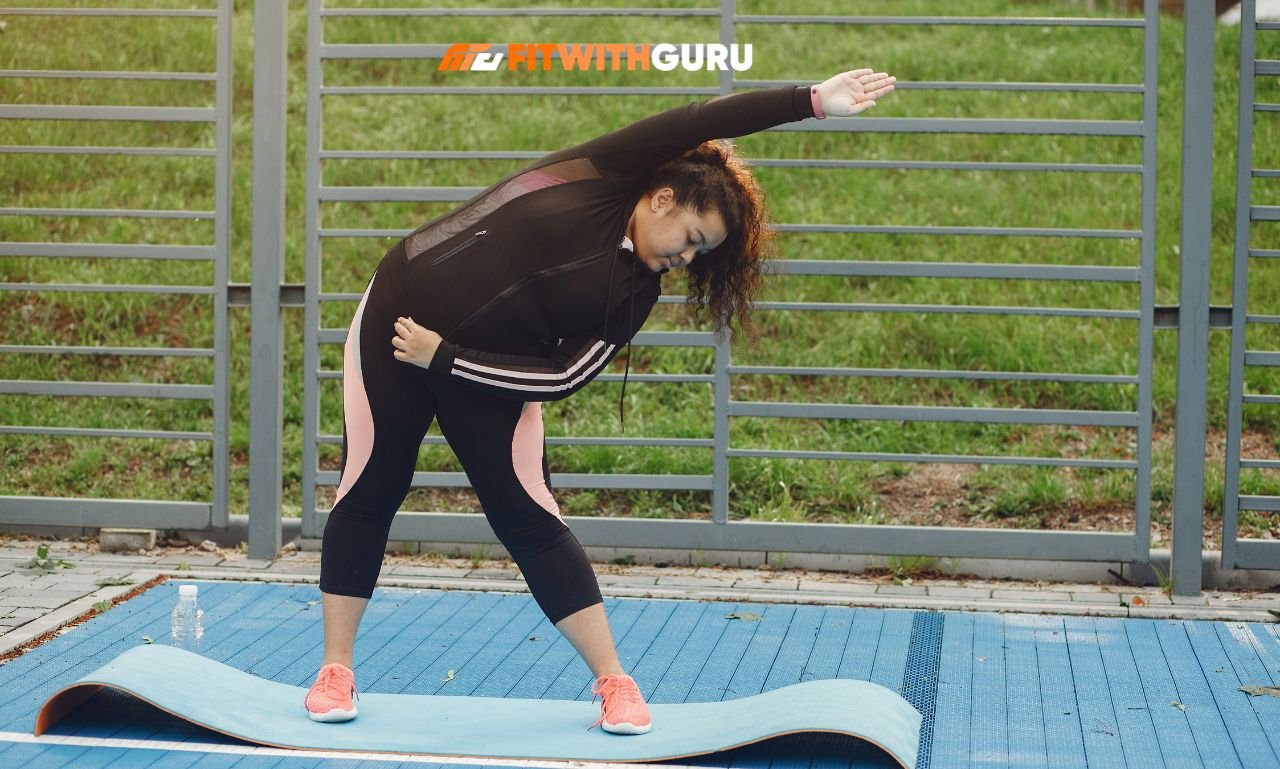
If you want to best Exercises to Increase Vertical Jump, you’ve come to the right place. Whether you’re a basketball player aiming to dunk, a volleyball athlete working on your spike, or just someone who wants to jump higher, improving your vertical leap requires targeted training that combines explosive power, strength, and proper technique.
In this guide, we’ll break down science-backed exercises that deliver real results, along with practical tips you can start using today. Let’s dive into the proven methods that can transform your jumping ability and help you reach new heights.
Understanding the Science Behind best Exercises to Increase Vertical Jump Training
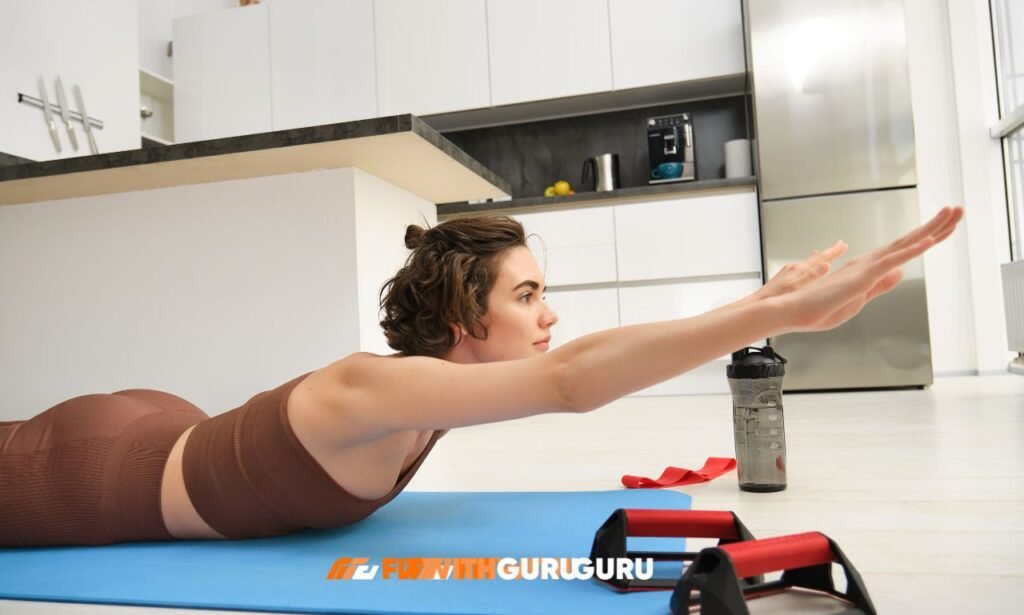
Before we explore the best workouts to improve vertical jump performance, it’s essential to understand the key factors that contribute to jumping higher. For example, building explosive strength in your back and shoulders plays a crucial role, and you can check out some effective dumbbell back exercises here for a quick guide. Printable Dumbbell Back Exercises – FitWithGuru
Your vertical leap depends on three primary factors: explosive lower-body power, fast-twitch muscle fibre activation, and neuromuscular coordination.
When you jump, your body performs a complex movement pattern called the stretch-shortening cycle. This process involves rapidly loading your muscles, briefly storing elastic energy, and explosively releasing that energy.
Your calves, quadriceps, hamstrings, glutes, and core all contribute to generating the force needed for maximum height.
Research indicates that athletes who combine plyometric training with strength training experience vertical jump improvements of 4-8 inches within 8-12 weeks.
The key is consistency, progressive overload, and focusing on exercises that mimic the explosive nature of jumping.
1. Box Jumps: The Foundation of Explosive Power
Box jumps rank among the best exercises to increase vertical because they directly train the explosive movement pattern required for jumping.
This exercise teaches your body to generate maximum force in the shortest time possible while improving your landing mechanics. You can follow a minimalist workout routine designed to maximize power and efficiency here.
How to Perform Box Jumps:
- Select a box height of 20-30 inches for beginners
- Stand facing the box with feet shoulder-width apart
- Quickly drop into a quarter squat while swinging your arms back
- Explosively drive through your legs while swinging your arms forward
- Land softly with both feet simultaneously, knees slightly bent
- Step down carefully rather than jumping down
- Perform 3-4 sets of 5-8 repetitions
As you progress, gradually increase box height or add a weighted vest for additional resistance.
The beauty of box jumps lies in their versatility—you can perform them almost anywhere with minimal equipment, making them perfect for the best exercises to increase vertical jump at home.
Common mistakes include using excessive box height, which compromises the landing position, and neglecting the arm swing that contributes significantly to jump height.
2. Depth Jumps: Maximizing Reactive Strength
Depth jumps are an advanced plyometric exercise that develop reactive strength—your body’s ability to quickly transition from muscle lengthening to shortening. Using the best resistance bands for home workouts can further enhance your strength and explosiveness.
This quality separates average jumpers from elite athletes who seem to defy gravity.
How to Perform Depth Jumps:
- Stand on a box or platform 12-24 inches high
- Step off the box (don’t jump off)
- Immediately upon landing, explode upward as high as possible
- Minimize ground contact time—imagine escaping from hot lava
- Land softly and reset between reps
- Perform 3-4 sets of 3-5 repetitions
- Rest 2-3 minutes between sets
The goal is to minimize ground contact time while maximizing vertical displacement.
Your muscles undergo a rapid stretch-shortening cycle during the landing and takeoff, which enhances elastic energy storage and utilization.
Athletes should have a solid strength foundation before incorporating depth jumps—if you can’t squat at least 1.5 times your bodyweight, focus on building strength first.
3. Bulgarian Split Squats: Building Unilateral Leg Strength
While bilateral exercises are essential, single-leg movements, such as Bulgarian split squats, help address strength imbalances that can limit your jumping potential. For added resistance at home, try the best resistance band set for home workouts.
This exercise hammers your quadriceps, glutes, and hip stabilizers while improving balance and coordination.
How to Perform Bulgarian Split Squats:
- Position your rear foot on a bench approximately knee height behind you
- The front foot should be far enough forward that your knee stays behind your toes
- Descend until your rear knee nearly touches the ground
- Maintain an upright torso throughout the movement
- Drive through your front heel to return explosively
- Hold dumbbells at your sides or a barbell across your back for resistance
- Complete 3-4 sets of 8-12 repetitions per leg
The unilateral nature forces each leg to carry the whole load, preventing your dominant leg from compensating for a weaker side.
Research indicates that correcting strength asymmetries can improve vertical jump height by 3–6%. Beginners can start safely with easy bodyweight exercises to build foundational strength before progressing to advanced movements.
4. Trap Bar Deadlifts: Developing Total Lower Body Power
Trap bar deadlifts belong in every vertical jump training program because they build foundational strength across your entire posterior chain.
This exercise targets the glutes, hamstrings, and lower back, which provide the power behind explosive movements.
How to Perform Trap Bar Deadlifts:
- Step inside a trap bar with feet hip-width apart
- Grip the handles at your sides
- Push your hips back, engage your lats, and brace your core
- Drive through heels and extend hips forcefully to lift
- Finish in a tall standing position
- Lower the weight by pushing your hips back first, then bending your knees
- Perform 4-5 sets of 3-6 repetitions with heavy weight
The neutral grip and weight distribution of the trap bar make it more accessible than conventional deadlifts while still delivering exceptional strength gains.
Athletes who incorporate heavy strength training alongside plyometrics see superior vertical jump improvements compared to those doing plyometrics alone. For a simple yet effective plan, you can follow this daily bodyweight workout routine.
5. Single-Leg Bounding: Sport-Specific Power Development
Single-leg bounding bridges the gap between pure strength exercises and sport-specific jumping movements.
This exercise develops the ability to generate and absorb force on one leg—a skill directly applicable to running jumps in basketball and other sports.
How to Perform Single-Leg Bounding:
- Find an open space of at least 20-30 yards
- Push off explosively from your right foot
- Drive your left knee up while covering maximum horizontal distance
- Land on your left foot and immediately bound off that leg
- Continue alternating legs in a rhythmic, flowing pattern
- Arms should swing in opposition to legs
- Complete 3-4 sets of 20-30 yards
- Rest 2-3 minutes between sets
The unilateral nature of bounding improves reactive strength in each leg independently while enhancing coordination and balance.
Bounding also teaches you to utilize the stretch-shortening cycle efficiently across multiple consecutive jumps.
6. Weighted Jump Squats: Combining Strength with Speed
Weighted jump squats are one of the most effective workouts for increasing vertical jump height, as they directly target the speed-strength qualities needed for maximum lift. You can also complement your training with fat-burning bodyweight exercises to improve overall power and conditioning.
This exercise teaches your nervous system to recruit muscle fibres under load rapidly.
How to Perform Weighted Jump Squats:
- Load a barbell with 20-30% of your back squat max
- Position it across your upper back
- Descend into a quarter to half squat position
- Explode upward with maximum velocity, leaving the ground
- Land softly with knees bent
- Immediately descend into the next repetition
- Perform 4-5 sets of 3-5 repetitions
- Rest 2-3 minutes between sets
Research indicates that training in the 20-30% load range optimizes the velocity-specific adaptations that improve vertical jump performance.
The key is to move the weight as fast as possible—velocity matters more than load in this exercise.
7. Calf Raises: The Often-Overlooked Jump Component
While many training programs focus exclusively on hip and knee extension, your calves play a crucial role in the final phase of jump takeoff.
Calf raises strengthen the gastrocnemius and soleus muscles, providing extra upward thrust for higher jumps. For guidance on integrating them into your routine, check out this full-body workout you can do every day.
How to Perform Calf Raises:
- Stand on an elevated surface with the balls of your feet on the edge
- Lower your heels below the level of your toes for a deep stretch
- Explosively drive up onto your toes
- Reach maximum height at the top of the movement
- Pause briefly at peak contraction before lowering
- Perform both straight-leg and bent-knee variations
- Complete 3-4 sets of 12-20 repetitions
Strong, explosive calves contribute 15-20% of your total vertical jump force according to biomechanical analysis.
Single-leg calf raises work exceptionally well for home training, requiring nothing more than a step or curb.
Creating Your Vertical Jump Training Program
Understanding individual exercises is essential, but organising them into a practical program determines your actual results.
The most effective approach combines lower-body strength training, plyometric exercises, and adequate recovery within a structured weekly schedule.
Sample Weekly Template:
Strength Day:
- Trap Bar Deadlifts: 4 sets x 5 reps
- Bulgarian Split Squats: 3 sets x 8 reps per leg
- Weighted Calf Raises: 3 sets x 15 reps
Plyometric Day:
- Box Jumps: 4 sets x 6 reps
- Depth Jumps: 3 sets x 4 reps
- Single-Leg Bounding: 3 sets x 30 yards
Power Day:
- Weighted Jump Squats: 5 sets x 4 reps
- Box Jumps: 3 sets x 5 reps
- Single-Leg Calf Raises: 3 sets x 12 reps per leg
Progressive overload remains essential—gradually increase weights, box heights, or movement difficulty as you adapt to the changes.
Testing your vertical jump every 3-4 weeks provides objective feedback on the effectiveness of your program.
| Training Phase | Focus | Duration | Weekly Structure |
| Foundation | Strength Building | 4-6 weeks | 3 strength days, 1 plyometric day |
| Power Development | Speed-Strength | 4-6 weeks | 2 strength days, 2 plyometric days |
| Peak Performance | Explosive Power | 2-4 weeks | 1 strength day, 2-3 plyometric days |
Common Mistakes That Limit best Exercises to Increase Vertical Jump Progress
Even athletes following solid programs often sabotage their results through preventable errors.
Key Mistakes to Avoid:
- Neglecting the eccentric phase—control your descent during exercises
- Inadequate warm-up before plyometric training
- Chasing volume over quality with explosive movements
- Ignoring mobility limitations in the ankles, hips, or thoracic spine
- Training too frequently without adequate recovery
- Poor landing mechanics during plyometric exercises
Your body needs time to rebuild stronger between sessions—more isn’t always better.
Nutrition Strategies to Support Vertical Jump Training
Your training program provides the stimulus for adaptation, but nutrition supplies the raw materials your body needs to build strength and power.
Essential Nutrition Guidelines:
- Consume 0.7-1 gram of protein per pound of bodyweight daily
- Time carbohydrates before and after workouts for fuel and recovery
- Supplement with 5 grams of creatine daily for improved power output
- Drink half your bodyweight in ounces of water daily
- Include anti-inflammatory foods like fatty fish, berries, and leafy greens
Proper nutrition accelerates vertical jump improvements and supports recovery between intense sessions.
FAQs
How long does it take to increase your vertical jump?
Most athletes see noticeable vertical jump improvements within 4–6 weeks of consistent training, with significant gains (3–6 inches) typically occurring over 8–12 weeks. Your starting fitness level, training consistency, and genetics play a big role. For structured guidance, try these exercise routines with dumbbells to maximize your results.
Beginners often experience faster initial progress, while advanced athletes may require longer training blocks to achieve smaller incremental gains.
Can I increase my best Exercises to Increase Vertical Jump by training at home?
Absolutely—many of the best exercises to increase vertical at home require minimal equipment and deliver excellent results.
Box jumps, depth jumps, single-leg bounding, Bulgarian split squats with dumbbells, bodyweight jump squats, and calf raises can all be performed effectively at home.
The limitation isn’t location but rather your commitment to consistent, progressive training with proper technique.
What is the best exercise for vertical jump?
No single exercise reigns supreme—the most effective approach combines multiple movements that address different aspects of jumping ability.
Box jumps develop explosive power, depth jumps enhance reactive strength, trap bar deadlifts build foundational strength, and weighted jump squats train speed-strength qualities.
Your individual weaknesses determine which exercises provide the greatest return on investment.
Should I do plyometrics every day to improve my vertical jump?
No plyometric exercises place significant stress on your nervous system and musculoskeletal structures, so adequate recovery is required between sessions.
Training in plyometrics 2–3 times per week, with at least 48 hours between sessions, allows for proper recovery while still providing enough stimulus for improvement. Women can follow a bodyweight workout at home to safely build strength and explosiveness.
Daily plyometric training can lead to accumulated fatigue and an elevated risk of injury.
Do I need to be able to dunk to benefit from the best Exercises to Increase Vertical Jump training?
Not at all—vertical jump training benefits athletes across all sports and skill levels, from recreational enthusiasts to professional competitors.
Basketball players utilise improved jumping for rebounding, volleyball athletes enhance their hitting ability, and recreational fitness enthusiasts benefit from the athletic development that comes from jump training. Focus on consistent progressive training regardless of your starting point.
Conclusion
Increasing your vertical jump requires a strategic combination of explosive plyometric exercises, foundational strength training, and a well-designed program. A structured approach, like these 5-day weight training splits, can help maximize your results efficiently.
The seven exercises outlined in this guide—box jumps, depth jumps, Bulgarian split squats, trap bar deadlifts, single-leg bounding, weighted jump squats, and calf raises—represent the most effective movements for developing the power and strength necessary for maximum jump height.
Success comes from consistent application of these principles over weeks and months, not from searching for shortcuts.
At FitWithGuru, we’ve seen countless athletes transform their jumping ability by committing to structured training, prioritizing recovery, and maintaining patience throughout the adaptation process.
Whether you’re training in a fully-equipped gym or working with minimal equipment at home, these proven exercises will deliver measurable improvements in your vertical leap.
Start implementing these strategies today, track your progress objectively, and watch as your vertical jump reaches new heights you previously thought impossible.
