
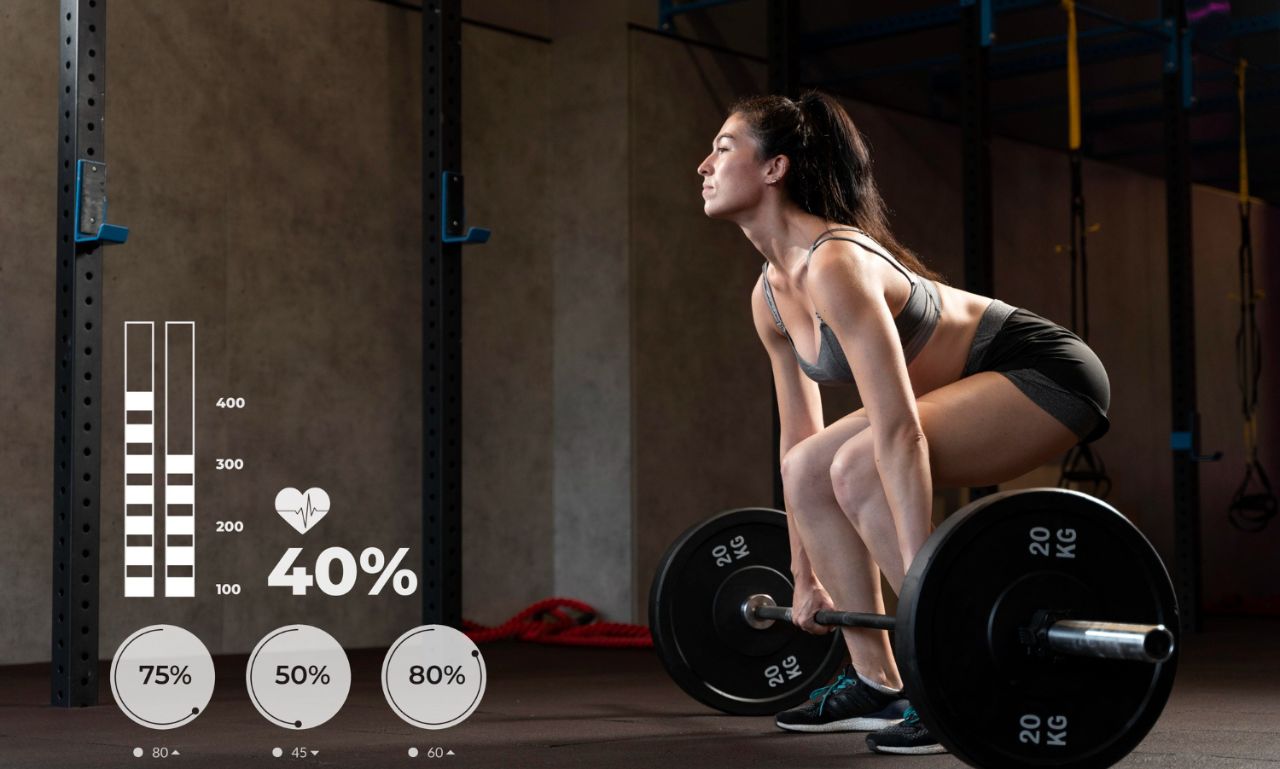
Bodybuilding fitness plans are structured workout programs designed to help you build muscle mass, increase strength, and achieve a well-defined physique through progressive resistance training.
Having a solid bodybuilding fitness plans makes the difference between random workouts and real muscle growth.
Your body needs consistent progressive overload, adequate recovery, and the right exercise combination to trigger muscle hypertrophy.
The Science Behind Effective Bodybuilding Fitness Programs
When you lift weights, you create microscopic tears in your muscle fibers—this damage triggers your body’s repair mechanism, which rebuilds the fibers thicker and stronger.
This process requires three critical components: mechanical tension (lifting challenging weights), metabolic stress (the burning sensation), and muscle damage (microscopic tears).
Your bodybuilding gym plans should strategically incorporate all three mechanisms to optimize muscle growth.
Progressive overload is the cornerstone principle—you must continually challenge your muscles by increasing weight, reps, or sets, or decreasing rest time.
Without progressive overload, your muscles adapt and stop growing, which explains why many people plateau after initial beginner gains.
Recovery matters just as much as training intensity because muscles grow during rest periods when your body repairs the damage.
Top 5 Bodybuilding Fitness Plans That Actually Work
1. The Classic Push-Pull-Legs Split
The push-pull-legs split remains one of the most popular bodybuilding fitness programs because it allows you to train each muscle group twice per week while providing adequate recovery.
Push days target chest, shoulders, and triceps; pull days focus on back and biceps; leg days work your lower body.
This bodybuilding fitness plans structure prevents overtraining by grouping muscles that work together.
You can run this split three days per week (once through) or six days per week (twice through) depending on your recovery capacity.
Sample Push Day:
- Barbell bench press: 4 sets of 6-8 reps
- Incline dumbbell press: 3 sets of 8-10 reps
- Overhead press: 3 sets of 8-10 reps
- Cable flyes: 3 sets of 12-15 reps
- Tricep dips: 3 sets of 8-12 reps
- Lateral raises: 4 sets of 12-15 reps
Pull Day Routine:
- Deadlifts: 4 sets of 5-6 reps
- Pull-ups: 3 sets to failure
- Barbell rows: 3 sets of 8-10 reps
- Face pulls: 3 sets of 15-20 reps
- Barbell curls: 3 sets of 10-12 reps
- Hammer curls: 3 sets of 10-12 reps
Sample Leg Day:
- Squats: 4 sets of 6-8 reps
- Romanian deadlifts: 3 sets of 8-10 reps
- Leg press: 3 sets of 10-12 reps
- Leg curls: 3 sets of 12-15 reps
- Calf raises: 4 sets of 15-20 reps
2. The Upper-Lower Body Split for Beginners
The upper-lower split provides an excellent starting point for beginners that’s less overwhelming than advanced bodybuilding gym plans.
This bodybuilding fitness plan divides training into upper-body days (chest, back, shoulders, arms) and lower-body days (quads, hamstrings, glutes, calves).
Training four days per week—two upper and two lower—gives beginners enough stimulus to grow while allowing sufficient recovery.
Upper Body Workout:
- Bench press: 4 sets of 8-10 reps
- Bent-over rows: 4 sets of 8-10 reps
- Overhead press: 3 sets of 8-10 reps
- Pull-ups or lat pulldowns: 3 sets of 8-12 reps
- Bicep curls: 3 sets of 10-12 reps
- Tricep pushdowns: 3 sets of 10-12 reps
Lower Body Workout:
- Squats: 4 sets of 8-10 reps
- Romanian deadlifts: 3 sets of 8-10 reps
- Leg extensions: 3 sets of 12-15 reps
- Leg curls: 3 sets of 12-15 reps
- Calf raises: 4 sets of 12-15 reps
3. The German Volume Training Method
German Volume Training (GVT) represents an advanced bodybuilding fitness plans that’s incredibly effective for breaking through plateaus.
This intense bodybuilding fitness program involves performing 10 sets of 10 reps with the same weight on compound exercises, with 60-90 second rest periods between sets.
The sheer volume creates massive metabolic stress and muscle damage, triggering significant hypertrophy.
Warning: GVT is not for beginners—your body needs a solid training foundation before attempting this demanding approach.
Sample GVT Chest & Back Day:
- Bench press: 10 sets of 10 reps (60 seconds rest)
- Bent-over rows: 10 sets of 10 reps (60 seconds rest)
- Incline dumbbell press: 3 sets of 10-12 reps
- Cable rows: 3 sets of 10-12 reps
You rotate through different body part pairings throughout the week, typically running GVT for 6 weeks before switching approaches.
4. The Bro Split for Maximum Focus
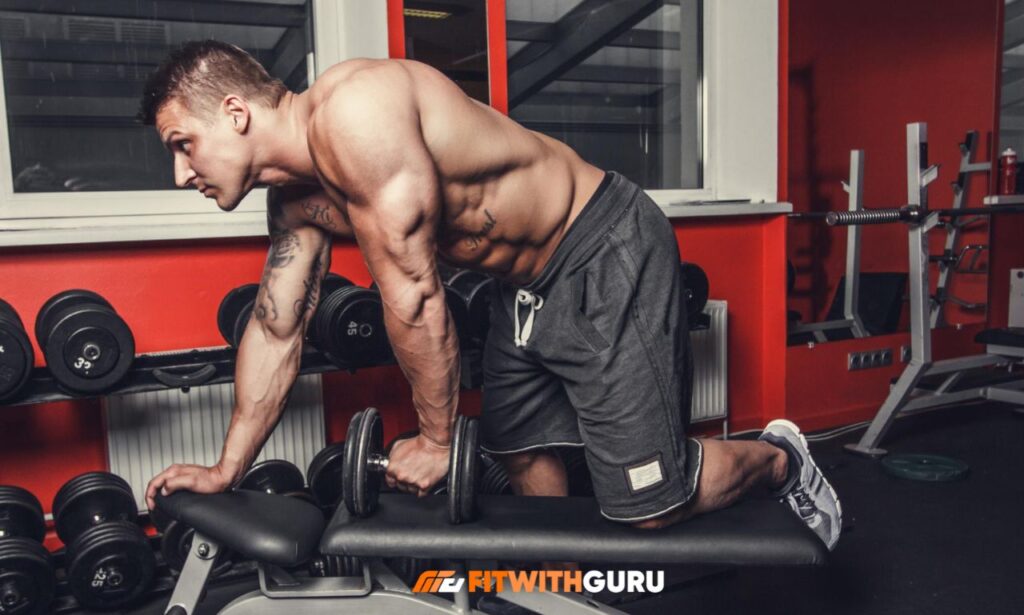
The traditional “bro split” dedicates one entire workout to each major muscle group, allowing you to focus on each body part with high volume entirely.
This bodybuilding gym plan typically looks like this: Monday: chest; Tuesday: back; Wednesday: shoulders; Thursday: legs; Friday: arms.
While some experts criticize this approach for training each muscle only once per week, it works incredibly well for intermediate and advanced lifters who can generate sufficient intensity.
Sample Chest Day:
- Flat barbell bench press: 4 sets of 6-10 reps
- Incline dumbbell press: 4 sets of 8-12 reps
- Decline press: 3 sets of 10-12 reps
- Cable flyes: 3 sets of 12-15 reps
- Pec deck: 3 sets of 15-20 reps
- Push-ups: 3 sets to failure
5. The Full Body Training Approach
Full-body bodybuilding fitness plans work exceptionally well for beginners and those with limited training days.
This bodybuilding fitness workout hits all major muscle groups in each session, typically performed three times weekly on non-consecutive days.
The key advantage is training frequency—each muscle group gets stimulated three times weekly, which research suggests optimizes muscle protein synthesis.
Sample Full Body Workout:
- Squats: 4 sets of 8-10 reps
- Bench press: 4 sets of 8-10 reps
- Deadlifts: 3 sets of 6-8 reps
- Overhead press: 3 sets of 8-10 reps
- Pull-ups: 3 sets to failure
- Planks: 3 sets of 60 seconds
How to Perform Key Bodybuilding Exercises Correctly
Proper form prevents injuries and ensures you’re targeting the intended muscles during your bodybuilding fitness plans.
Barbell Bench Press Technique:
- Lie flat on a bench with feet firmly planted on the floor
- Grip the bar slightly wider than shoulder-width apart
- Unrack the bar and position it directly above your chest
- Lower the bar in a controlled manner to your mid-chest
- Press the bar back up explosively while keeping your shoulder blades squeezed
- Avoid bouncing the bar off your chest
Deadlift Technique:
- Stand with feet hip-width apart, bar over mid-foot
- Bend down and grip the bar just outside your legs
- Lower your hips and push your chest out while keeping your back flat
- Take a deep breath and brace your core
- Drive through your heels and stand up, pulling the bar close to your body
- Lock out at the top by squeezing the glutes
Squat Technique:
- Position the bar on your upper back (not your neck)
- Stand with feet shoulder-width apart, toes slightly pointed out
- Take a deep breath and brace your entire core
- Descend by pushing your hips back and bending your knees
- Go at least to parallel (hip crease below knee level)
- Drive back up by pushing through your entire foot
Nutrition Fundamentals for Your Bodybuilding Fitness Plan
No bodybuilding gym plan will deliver results without proper nutrition—you cannot out-train a bad diet.
Muscle growth requires a caloric surplus combined with adequate protein intake to provide building blocks for new tissue.
Most bodybuilders need 0.8-1 gram of protein per pound of bodyweight daily, alongside sufficient carbohydrates to fuel intense training.
Carbohydrates are essential for replenishing muscle glycogen and supporting the high training volumes required in effective bodybuilding fitness programs.
Healthy fats support hormone production, including testosterone, which plays a crucial role in muscle building.
| Macronutrient | Daily Target | Purpose |
| Protein | 0.8-1g per lb bodyweight | Muscle repair and growth |
| Carbohydrates | 2-3g per lb bodyweight | Energy and glycogen replenishment |
| Fats | 0.3-0.5g per lb bodyweight | Hormone production |
Progressive Overload Strategies to Maximize Results
Progressive overload means consistently increasing the demands placed on your muscles over time within your bodybuilding fitness workout routine.
The most straightforward method is to add weight to the bar once you can complete all prescribed sets and reps with good form.
Alternatively, you can increase training volume by adding sets or reps, decrease rest periods between sets, or improving exercise technique.
Keep a training log to track every workout—what gets measured gets improved.
Many lifters fail to grow because they use the same weights week after week, never challenging their muscles to adapt.
Common Mistakes That Sabotage Your Bodybuilding Gym Plans
Training too frequently without adequate recovery destroys gains rather than accelerating them—muscle growth happens during rest.
Ego lifting with weights too heavy for proper form shifts tension away from target muscles and dramatically increases injury risk.
Neglecting compound movements in favor of isolation exercises limits overall muscle and strength development.
Inconsistent training represents the biggest progress killer—showing up randomly won’t build muscle regardless of how perfect your bodybuilding fitness program looks.
Neglecting sleep sabotages recovery and hormone production; aim for 7-9 hours nightly.
People Also Ask
How long will it take to see results from my bodybuilding fitness plans?
Most beginners notice strength increases within 2-3 weeks as neurological adaptations occur, while visible muscle growth typically becomes apparent after 6-8 weeks of consistent training and proper nutrition.
Can I build muscle with bodybuilding gym plans while losing fat at the same time?
Beginners and those returning after a layoff can successfully build muscle in a caloric deficit through body recomposition, but this becomes increasingly difficult as you become more trained.
How often should I change my bodybuilding fitness workout?
You should stick with the same bodybuilding fitness plans for at least 8-12 weeks to allow progressive overload to work, though you can make minor exercise substitutions every 4-6 weeks if needed.
Do I need supplements to succeed with bodybuilding fitness programs?
Supplements are not necessary for building muscle—consistent training, adequate protein intake, sufficient calories, and proper sleep matter infinitely more than any supplement.
What’s the ideal training split for natural bodybuilders?
Natural lifters generally respond best to training each muscle group 2-3 times per week with moderate volume per session rather than once weekly with extremely high volume.
Conclusion
Success in bodybuilding fitness plans requires following a structured program, applying progressive overload, fueling your body properly, and prioritizing recovery.
The five training splits outlined above each offer unique advantages depending on your experience level and schedule.
Start with one proven approach, track your progress, and stay consistent—your dream physique is built one workout at a time with FitWithGuru.
