
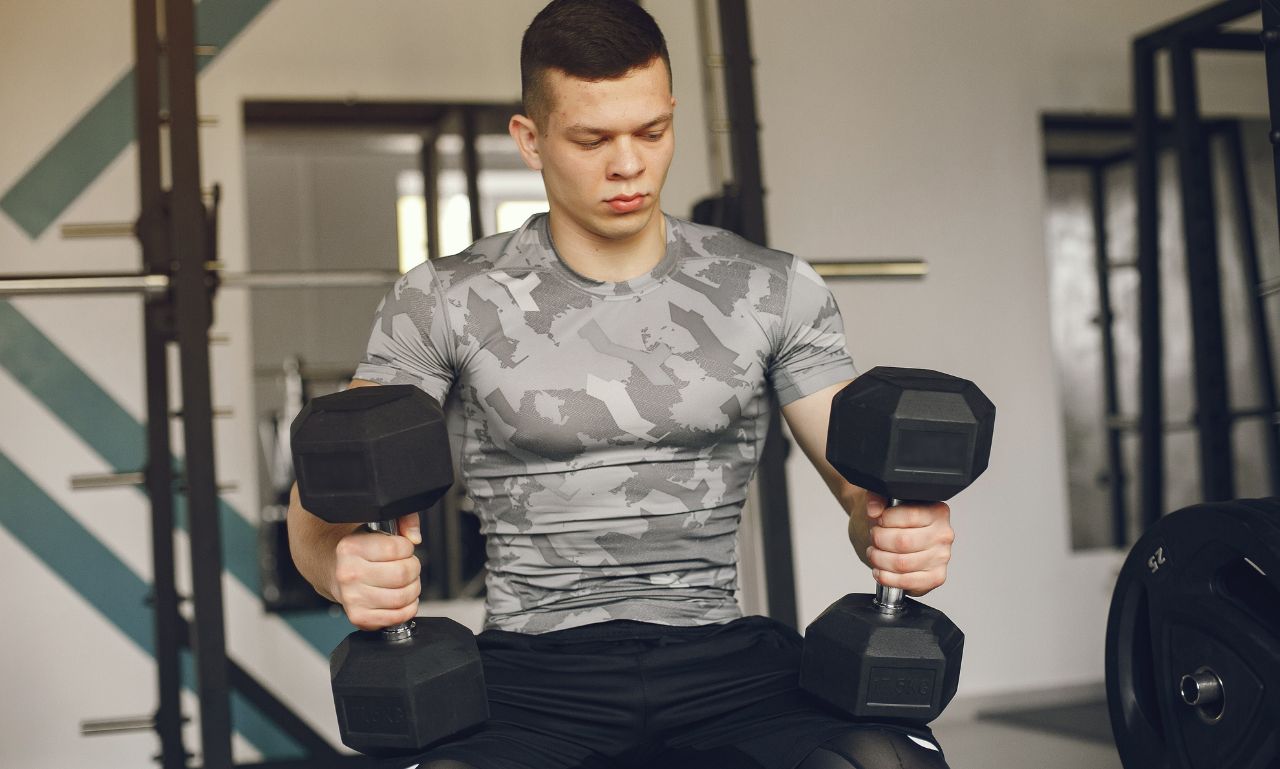
Strong shoulders are not just about looking good — they play a crucial role in upper-body strength, posture, and injury prevention. Whether you train at the gym or prefer home workouts, dumbbell exercises for shoulders are one of the most effective and versatile ways to build powerful deltoids.
Dumbbells allow natural movement, better muscle activation, and joint-friendly training. In this complete guide, you’ll learn the best dumbbell shoulder exercises, proper form, beginner-to-advanced routines, recovery tips, and common mistakes — helping you take your shoulder workouts to the next level.
Understanding Shoulder Anatomy
To train your shoulders effectively, it’s important to understand how they work. The shoulder is made up of three main muscle heads, each with a different role.
Anterior Deltoid (Front Shoulder)
The front delts are responsible for pushing movements such as shoulder presses and front raises. Strong anterior delts improve overall pressing strength and support exercises like bench presses and push-ups.
Lateral Deltoid (Side Shoulder)
The lateral delts create shoulder width and give your shoulders that round, capped look. If your goal is broader shoulders, this muscle group must be trained properly.
Posterior Deltoid (Rear Shoulder)
Rear delts help maintain good posture and shoulder balance. Weak rear delts often lead to rounded shoulders, muscle imbalances, and shoulder pain.
For best results, all three deltoid heads should be trained evenly.
Why Choose Dumbbell Exercises for Shoulders?
Compared to machines and barbells, dumbbells offer several unique advantages:
- Greater range of motion, leading to better muscle activation
- Corrects muscle imbalances by training each arm independently
- Joint-friendly and safer, thanks to natural movement patterns
- Perfect for home workouts with minimal equipment
- Improves functional strength used in daily activities
This is why many professional trainers and physical therapists recommend dumbbells for shoulder training.
Best Dumbbell Exercises for Shoulders
Dumbbells are one of the most versatile and effective tools for building strong, defined shoulders. Unlike machines or barbells, dumbbells allow for natural movement, greater range of motion, and better muscle activation. They also help correct imbalances between your left and right shoulder, which is crucial for symmetry and preventing injuries.
The best dumbbell exercises for shoulders target all three deltoid heads — anterior (front), lateral (side), and posterior (rear) — to ensure balanced development. Some of the most effective exercises include:
1. Dumbbell Shoulder Press
The dumbbell shoulder press is one of the most effective exercises for building overall shoulder strength and mass, targeting primarily the anterior (front) and lateral (side) delts. It is a staple in any shoulder workout because it engages multiple shoulder muscles while also working your triceps and upper chest to a lesser extent.
Muscles Worked: Front and side delts
Best For: Overall shoulder size and strength
The dumbbell shoulder press is one of the most effective exercises for building shoulder mass. It can be done seated or standing depending on your experience level.
How to Perform:
- Hold dumbbells at shoulder height
- Keep your core tight and spine neutral
- Press the dumbbells upward until arms are fully extended
- Lower slowly with control
Pro Tip: Avoid arching your lower back during the movement.
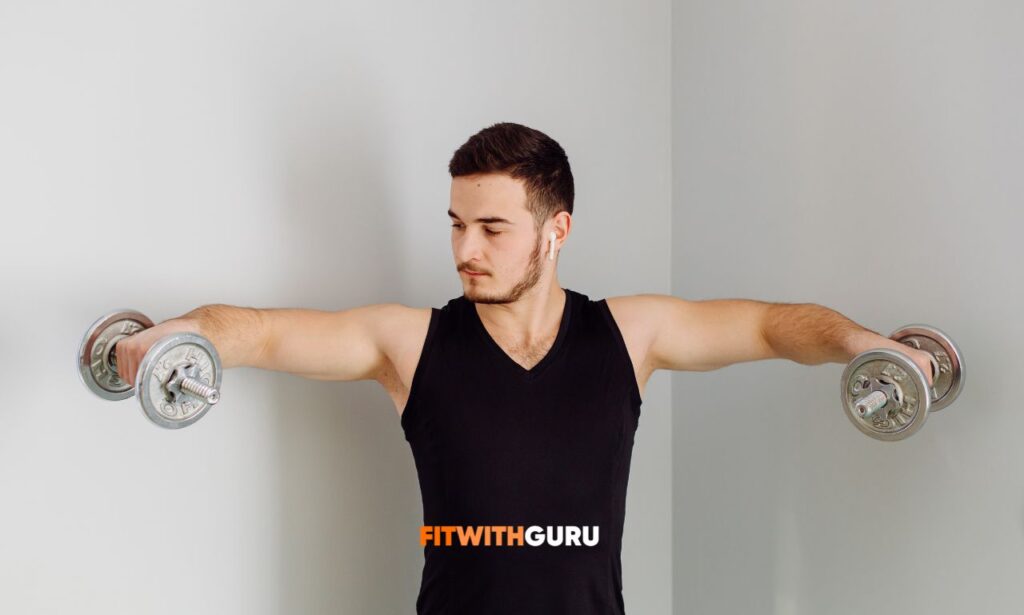
2. Dumbbell Lateral Raise
The dumbbell lateral raise is one of the most effective exercises for building shoulder width and creating a rounded, well-defined look. It specifically targets the lateral (side) deltoids, which are responsible for giving the shoulders a broader appearance.
This exercise is essential for anyone aiming to develop balanced and aesthetically pleasing shoulders.To perform the dumbbell lateral raise correctly, hold a dumbbell in each hand with your arms resting by your sides.
Keep a slight bend in your elbows and slowly raise the dumbbells outward until they reach shoulder height. Lower the weights back down in a controlled manner. Using light to moderate weights and focusing on slow, controlled movements ensures better muscle activation and reduces the risk of injury.
Muscles Worked: Lateral deltoids
Goal: Wider, more defined shoulders
This exercise is essential for building shoulder width and shape.
Form Tips:
- Use light to moderate weights
- Keep a slight bend in your elbows
- Raise the dumbbells to shoulder height only
- Move slowly and avoid swinging
Common Mistake: Using weights that are too heavy.
3. Dumbbell Front Raise
The dumbbell front raise is an effective exercise that targets the anterior (front) deltoid muscles, which play a key role in shoulder strength and definition. This movement helps improve pushing power and enhances the overall appearance of the front shoulders. It is especially useful for people who want better shoulder balance and stronger pressing performance.
To perform the dumbbell front raise, hold a dumbbell in each hand with your palms facing your thighs. Keep a slight bend in your elbows and slowly lift the dumbbells forward until they reach shoulder height. Pause briefly at the top, then lower the weights back down with control. Using proper form and moderate weight ensures maximum muscle activation while minimizing strain on the shoulders.
Muscles Worked: Anterior deltoids
Front raises improve shoulder definition and enhance pushing strength.
Popular Variations:
- Alternating front raises
- Both arms together
- Neutral-grip front raises for joint comfort
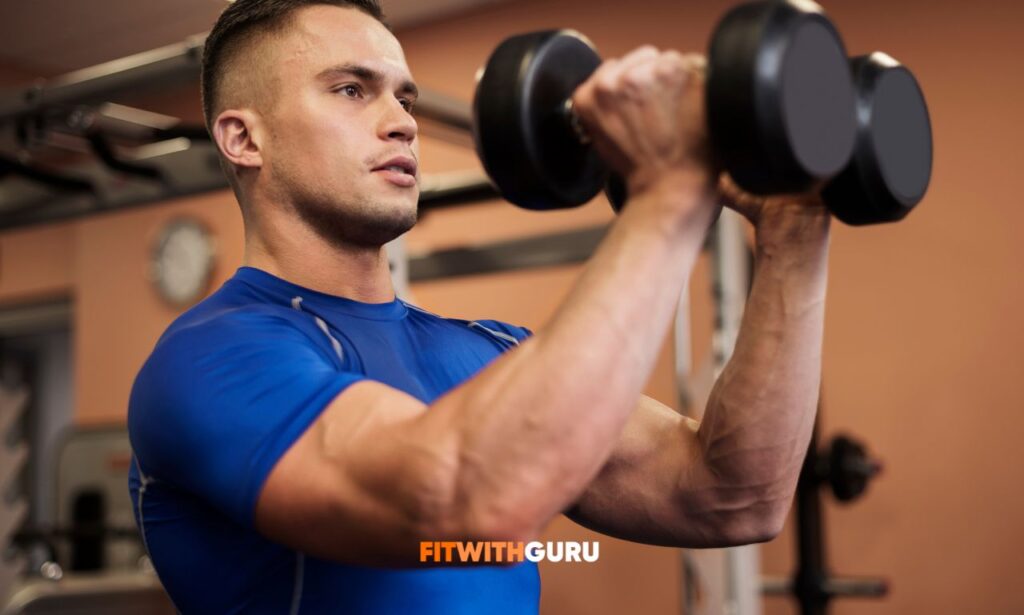
4. Arnold Press (Advanced Shoulder Exercise)
The Arnold Press is an advanced shoulder exercise that targets all three heads of the deltoid muscle, making it one of the most effective movements for complete shoulder development. Unlike a traditional shoulder press, the Arnold Press involves a rotational movement, which increases muscle activation and improves shoulder mobility. This exercise is ideal for intermediate to advanced lifters looking to add size, strength, and definition to their shoulders.
To perform the Arnold Press, start by holding dumbbells in front of your shoulders with your palms facing your body. As you press the dumbbells upward, rotate your palms outward until they face forward at the top of the movement. Lower the dumbbells back down slowly while rotating your palms back to the starting position. Use controlled movements and moderate weight to maintain proper form and reduce the risk of shoulder strain.
Muscles Worked: All three deltoid heads
The Arnold press is a more advanced version of the shoulder press that includes rotation, leading to greater muscle activation.
Why It’s Effective:
- Targets the entire shoulder
- Promotes muscle growth and strength
- Improves shoulder stability and mobility
5. Dumbbell Rear Delt Fly
The dumbbell rear delt fly is a highly effective exercise that specifically targets the posterior (rear) deltoid muscles, which are often neglected in typical shoulder workouts. Strengthening the rear delts improves posture, balances shoulder development, and reduces the risk of shoulder injuries. This exercise is essential for creating well-rounded, defined shoulders and a strong upper back.
Muscles Worked: Posterior deltoids
Rear delts are often neglected, which can lead to posture problems and shoulder discomfort.
Benefits:
- Improves posture
- Balances upper-body strengt
- Reduces the risk of shoulder injuries
6 . Upright Dumbbell Row (Shoulder-Friendly Version)
The upright dumbbell row is an effective exercise that primarily targets the lateral deltoids and trapezius muscles, helping build width and strength in your shoulders and upper back. When performed correctly, it can enhance shoulder definition and improve posture, making it a valuable addition to any shoulder workout.
Muscles Worked: Side delts and trapezius
To keep this exercise safe, avoid lifting the dumbbells higher than chest level and maintain a comfortable grip width.
7. Dumbbell Shrugs
Dumbbell shrugs are a simple yet highly effective exercise that primarily targets the trapezius muscles. Strong traps not only enhance the overall appearance of your shoulders but also improve neck stability, upper-back strength, and posture. This exercise is perfect for adding a powerful, athletic look to your upper body.
Muscles Worked: Trapezius muscles
Strong traps give your shoulders a powerful, athletic appearance and support neck stability.
Home Shoulder Workout Using Dumbbells
A home shoulder workout using dumbbells is an effective and convenient way to build strong, defined shoulders without needing a gym. Dumbbells take up very little space and allow you to perform a wide range of shoulder exercises that target all three deltoid heads. This type of workout is ideal for beginners as well as experienced lifters who prefer training at home.
By following a structured routine and using proper form, you can achieve excellent results with just a pair of dumbbells. Home shoulder workouts also save time, reduce costs, and allow you to train consistently, which is the most important factor for long-term muscle growth and strength.
Beginner Routine
- Dumbbell Shoulder Press – 3×10
- Lateral Raise – 3×12
- Front Raise – 3×10
- Rear Delt Fly – 3×12
Intermediate Routine
- Arnold Press – 4×8
- Lateral Raise (Drop Set) – 4×12
- Upright Dumbbell Row – 3×10
- Dumbbell Shrugs – 4×15
How Many Reps & Sets for Shoulder Growth?
- Muscle Growth: 8–12 reps
- Strength: 4–6 reps
- Endurance / Fat Loss: 15–20 reps
Training shoulders 2–3 times per week delivers the best results.
Common Mistakes in Dumbbell Exercises for Shoulders Training
- Using excessively heavy weights
- Relying on momentum instead of muscle control
- Skipping warm-ups
- Ignoring rear delts
- Poor posture during exercises
These mistakes increase injury risk and slow down progress.
Shoulder Warm-Up (Highly Recommended)
Before starting your workout, perform a 5–7 minute warm-up:
- Arm circles (forward and backward)
- Resistance band pull-aparts
- Light dumbbell raises
This improves blood flow and prepares your joints for training.
Nutrition Tips for Shoulder Muscle Growth
Training alone isn’t enough — proper nutrition is essential:
- Protein: Eggs, chicken, fish
- Healthy fats: Nuts, olive oil, avocados
- Hydration: Supports muscle recovery
- Micronutrients: Vitamins and minerals
Protein intake: 0.7–1 gram per pound of bodyweight
Dumbbell Shoulder Exercises for Fat Loss
For fat loss, increase intensity and reduce rest time:
- Short rest periods (30–40 seconds)
- Supersets and circuits
- Higher repetitions
Example Superset:
- Dumbbell Lateral Raise + Dumbbell Front Raise
- 15 reps each × 4 rounds
Q1: Can dumbbells build complete shoulder muscles?
Yes, dumbbells can effectively train all three deltoid heads — front, side, and rear. They allow natural movement patterns, which lead to better muscle activation and control. When you follow proper form and apply progressive overload, your shoulders continue to grow stronger over time. With consistency and proper recovery, full shoulder development is absolutely achievable using dumbbells.
Q2: Are dumbbell shoulder workouts suitable for beginners?
Yes, dumbbell exercises are safe and beginner-friendly when done correctly. Starting with light weights helps beginners learn proper form and build muscle control. Dumbbells place less stress on the joints compared to heavy machines or barbells. Gradually increasing the weight over time is the best and safest approach for beginners.
Q3: Is it okay to work out with shoulder pain?
Working out with shoulder pain is not recommended. Training through pain can make the injury worse and slow down the recovery process. It’s important to rest first and identify the cause of the pain. You should only resume shoulder training after getting proper guidance from a doctor or physiotherapist.
Q4: Dumbbells vs machines – which is better?
Dumbbells provide a more natural range of motion and allow your muscles to move freely. They also activate stabilizer muscles, which helps improve overall strength and balance. Machines follow a fixed movement path, while dumbbells build functional strength that carries over into real-life movements. For long-term muscle growth and balanced development, dumbbells are generally the better choice.
Final Thoughts
Dumbbell exercises for shoulders are perfect for every fitness level — whether you are a beginner or an advanced lifter. With proper form, a balanced routine, and consistency, you can achieve strong, wide, and well-defined shoulders.
At FitWithGuru, our goal is to provide simple, effective, and science-based fitness guidance to help you reach your goals safely and efficiently.
Call To Action
If you want more effective workout plans, fitness tips, and muscle-building guides,
Visit: https://fitwithguru.com/
and take your fitness journey to the next level
