

The best method for developing toned, powerful, and proportionate arm muscles that command attention is to use dumbbells for arms workout. Dumbbells offer unparalleled versatility, whether your goal is to build functional strength for everyday tasks or to expand your shirt sleeves.
The beauty of dumbbell arm training is that it allows for natural movement patterns that lessen joint stress while isolating particular muscles.
Why Dumbbells Dominate Arm Development
Because each arm must perform an independent movement, dumbbell training has a very positive effect on your arms. Your stronger arm makes up for your weaker side when you use a barbell, creating imbalances that restrict your overall growth.
Over time, dumbbells eliminate these strength disparities by making both arms work equally hard. This bilateral training creates symmetrical arm development that looks impressive and functions optimally.
The range of motion available with dumbbells exceeds that of barbells or machines.Your shoulders, elbows, and wrists are not fixed in place; instead, they follow their natural paths.
This range of motion maximizes the recruitment of muscle fibers during each exercise while lowering the risk of injury. Free weight training activates more muscle fibers than machine-based alternatives, according to numerous studies.
Understanding Arm Anatomy for Better Results
Your arms are made up of a number of different muscle groups, each of which needs specific care. The long head and the short head are the two heads of the biceps brachii, which are located on the front of your upper arm.
Your triceps brachii occupies the back of your upper arm and actually contains three heads—the long head, lateral head, and medial head. The triceps make up roughly two-thirds of your upper arm mass, making it crucial for overall arm size.
The brachialis sits underneath your biceps and adds thickness to your arms when appropriately developed. Numerous smaller muscles in your forearms are in charge of wrist flexion, extension, and grip strength.
You can choose exercises that efficiently target each muscle group by being aware of this anatomy. All of these muscles must be trained through a variety of angles and movement patterns in order to fully develop the arm.
Complete Dumbbell Set for Arms Workout
The effectiveness and advancement of your training are greatly impacted by having the appropriate equipment. To suit various exercises and strength levels, a good dumbbell for arms workout should have a variety of weight options.
Essential Equipment:
- Light dumbbells (5-15 pounds) for isolation exercises and high-rep work
- Medium dumbbells (15-30 pounds) for standard bicep and tricep exercises
- Heavy dumbbells (30-50+ pounds) for compound movements and progressive overload
- Adjustable bench for various angles and support positions
- Exercise mat for floor-based movements
For at-home training, adjustable dumbbells are the most economical and space-efficient choice. An entire rack of fixed-weight options can be replaced with a single pair of adjustable dumbbells.
Your workout will run smoothly and uninterrupted if you can quickly switch up the weights between exercises. Circuit-style arm training, which necessitates short rest intervals, makes this efficiency particularly crucial.
Fundamental Dumbbell for Biceps Workout
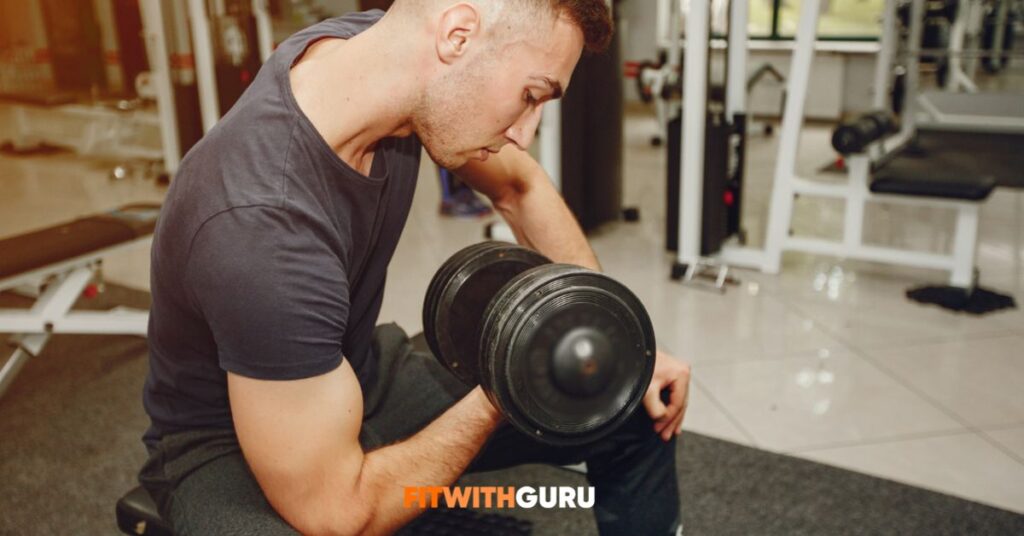
Curling exercises that are executed with a full range of motion and a controlled tempo are the best for your biceps. These fundamental exercises serve as the cornerstone of any successful program for developing the biceps.
1. Standard Dumbbell Bicep Curl
This traditional exercise is still the best way to increase the size and strength of your biceps. Strict form without swinging or momentum is necessary for proper execution.
How to perform:
- Stand with feet hip-width apart, holding dumbbells at your sides
- Keep your elbows tucked close to your torso throughout the movement
- Maintain a neutral spine with core engaged
- Curl both dumbbells upward by flexing your elbows
- Rotate your wrists so palms face your shoulders at the top
- Squeeze your biceps hard at the peak contraction
- Lower the weights slowly with a 3-second eccentric phase
- Perform 4 sets of 10-12 repetitions
2. Hammer Curl
This variation thickens your arms by targeting your brachialis and brachioradialis. When compared to standard curls, the neutral grip also lessens wrist strain.
How to perform:
- Hold dumbbells at your sides with palms facing each other
- Keep this neutral grip position throughout the entire movement
- Curl both weights upward while keeping elbows stationary
- Focus on squeezing the outside of your upper arms
- Lower with control back to the starting position
- Avoid any swinging or momentum
- Complete 3 sets of 12-15 repetitions
3. Incline Dumbbell Curl
Compared to standing curls, the incline position emphasizes the long head and stretches your biceps more. When done regularly, this exercise produces that amazing bicep peak.
How to perform:
- Set an adjustable bench to a 45-60 degree incline
- Sit back with dumbbells hanging at your sides
- Keep your shoulders pressed firmly against the pad
- Curl the weights upward with full supination
- Feel the deep stretch at the bottom position
- Squeeze hard at the top without letting elbows drift forward
- Perform 3 sets of 10-12 repetitions
Tricep Training with Dumbbell for Arms Exercise
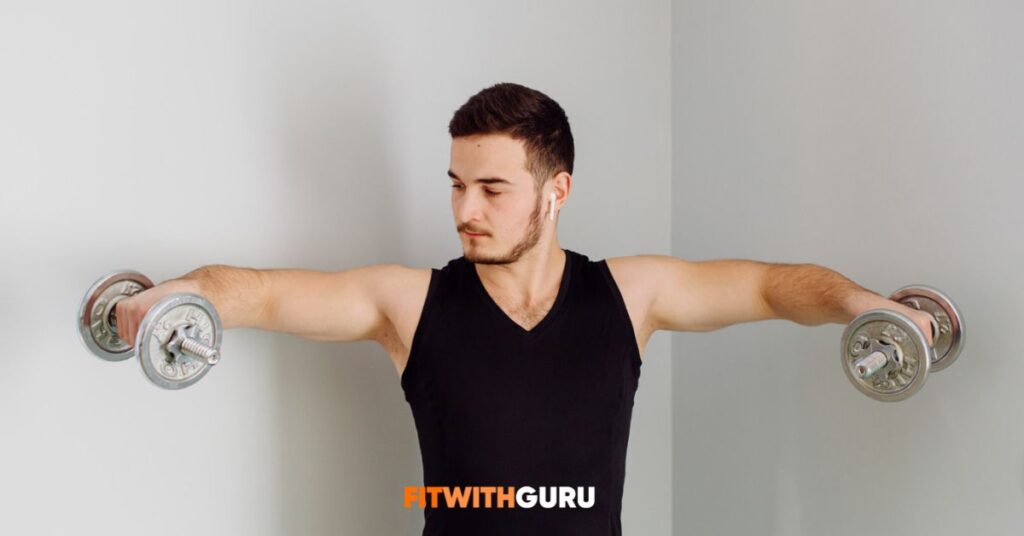
Targeting all three heads with a range of exercises and angles is necessary to develop horseshoe-shaped triceps. Your dumbbell for arms exercise selection should include both overhead and pressing movements.
4. Overhead Tricep Extension
This movement stretches the long head of your triceps, the largest of the three heads. Overhead work is essential for complete tricep development and overall arm size.
How to perform:
- Stand or sit holding one dumbbell with both hands overhead
- Keep your elbows close to your head, pointing toward the ceiling
- Lower the weight behind your head by bending only at the elbows
- Descend until you feel a deep stretch in your triceps
- Extend your arms back to the starting position
- Keep your upper arms stationary throughout the movement
- Complete 4 sets of 12-15 repetitions
5. Tricep Kickback
This isolation exercise teaches you to feel your triceps working while focusing on the lateral and medial heads. For strengthening the muscle-tendon junction close to your elbow, kickbacks are especially beneficial.
How to perform:
- Hinge forward at the hips with one hand supported on a bench
- Hold a dumbbell with your working arm at a 90-degree angle
- Keep your upper arm parallel to the ground and stationary
- Extend your forearm backwards until your arm is straight
- Squeeze your tricep hard at full extension
- Lower back to 90 degrees with control
- Perform 3 sets of 15 repetitions per arm
6. Close-Grip Dumbbell Press
Compared to isolation exercises, this compound movement lets you use larger weights. The pressing pattern works your shoulders and chest while focusing on all three tricep heads.
How to perform:
- Lie on a flat bench holding dumbbells with a neutral grip
- Position the weights close together above your chest
- Lower the dumbbells toward the sides of your chest
- Keep your elbows tucked at about 45 degrees
- Press the weights back up explosively
- Focus on feeling your triceps do the work
- Complete 4 sets of 8-10 repetitions
Specialized Dumbbell Arms Workout for Women
Women frequently want well-defined, toned arms without being overly bulky, which calls for particular programming techniques. You can follow this dumbbell for arms workout for women, which focuses on metabolic training and higher repetitions with moderate weight.
Upper Arm Definition
- Bicep Curls: 3 sets x 15 reps
- Overhead Tricep Extension: 3 sets x 15 reps
- Hammer Curls: 3 sets x 15 reps
- Tricep Kickbacks: 3 sets x 20 reps per arm
Arm Sculpting Superset
- Concentration Curls: 3 sets x 12 reps per arm
- Diamond Push-Ups (or modified): 3 sets x 10-15 reps
- Cross-Body Hammer Curls: 3 sets x 12 reps per arm
- Bench Dips: 3 sets x 15 reps
Metabolic Arm Burner
- Perform each exercise for 45 seconds with 15 seconds rest
- Alternating Bicep Curls
- Tricep Dips
- Hammer Curls
- Overhead Extensions
- Repeat circuit 3 times
For lean, defined arms, this programming method combines strength training with calorie burning. Without appreciably increasing muscle size, the higher rep ranges produce metabolic stress that improves muscle tone.
Comprehensive Dumbbell Arms Workout for Men
In order to achieve maximum arm growth, men usually use heavier weights and a deliberate volume distribution. This dumbbell arms exercise for men emphasizes mechanical tension and progressive overload.
Heavy Bicep Day:
- Alternating Dumbbell Curls: 5 sets x 6-8 reps per arm (heavy weight)
- Incline Dumbbell Curls: 4 sets x 8-10 reps
- Hammer Curls: 4 sets x 10-12 reps
- Concentration Curls: 3 sets x 12-15 reps per arm
Heavy Tricep Day:
- Close-Grip Dumbbell Press: 5 sets x 6-8 reps (heavy weight)
- Overhead Tricep Extension: 4 sets x 8-10 reps
- Tricep Kickbacks: 4 sets x 12-15 reps per arm
- Diamond Push-Ups: 3 sets to failure
Volume Arm Day (72 hours later):
- Giant Set (4 rounds, minimal rest):
- Bicep Curls: 12 reps
- Overhead Extensions: 12 reps
- Hammer Curls: 12 reps
- Kickbacks: 15 reps per arm
You can train your arms twice a week using two different stimuli—one heavy and one volume-focused—by using this split approach. The variation maximizes gains in size and strength while preventing adaptation.
Advanced Techniques for Maximum Arm Growth
Advanced training methods speed up your progress once you’ve mastered fundamental exercises. These techniques boost training intensity without merely increasing the number of sets or exercises.
Drop Sets: Reduce the weight by 20–30% as soon as you reach failure, then repeat until you fail again. This method increases metabolic stress and lengthens your set. For maximum pump and growth stimulation, use drop sets on the last set of each exercise.
Mechanical Drop Sets:Perform a set to failure in a challenging position, then switch to a simpler variation right away. Example: Incline curls to failure, then immediately stand and continue with standard curls.
21s: Split the range of motion into three stages: seven repetitions in the lower half, seven in the upper half, and seven total repetitions. Throughout the course of 21 repetitions, this brutal technique maintains constant tension in your muscles.
Eccentric Emphasis: Every repetition should include a 4–5 second lowering phase. Significant muscle damage is caused by the eccentric portion, which promotes growth and adaptation.
Rest-Pause Training: Squeeze out three to four more repetitions after performing a set to failure and resting for fifteen seconds. For an extended, high-intensity set, rest for an additional 15 seconds before performing two to three final repetitions.
Creating Your Perfect Arm Training Schedule
Adequate recovery and training stimulus are guaranteed by strategic scheduling. Your level of experience and ability to recover will determine how often you work out your arms with dumbbells.
Beginner Arm Schedule (2x weekly):
- Monday: Full-body workout including arms
- Thursday: Full-body workout including arms
- Focus on mastering basic movement patterns
Intermediate Arm Schedule (2-3x weekly):
- Monday: Heavy arm day (6-8 reps)
- Wednesday: Upper body (arms trained secondarily)
- Friday: Volume arm day (12-15 reps)
Advanced Arm Schedule (3x weekly):
- Monday: Heavy biceps, light triceps
- Wednesday: Heavy triceps, light biceps
- Friday: High-volume arm specialization
For the best growth, rest days are a must. Instead of during the actual workout, your muscles grow during recovery times.
Progressive overload must be implemented systematically every 2-3 weeks. Add weight when you can complete all sets and reps with perfect form.
Nutrition Strategies for Arm Development
Training provides the stimulus, but nutrition determines whether your arms actually grow. Your dumbbell for arms workout results depend heavily on what you eat outside the gym.
Protein Requirements: Consume 0.8-1 gram per pound of bodyweight daily. For the best muscle protein synthesis, divide protein equally among four to five meals.
Caloric Surplus for Growth: Consume 250–500 extra calories to help you gain muscle. If you’re not gaining 0.5 to 1 pound each week, track your weight and make calorie adjustments.
Pre-Workout Nutrition: One to two hours before working out, eat 20 to 30 grams of protein and 30 to 50 grams of carbs. This provides amino acids and energy for your workout.
Post-Workout Recovery: After working out, consume 30 to 40 grams of protein within two hours. Incorporate quick-digesting carbs to boost recuperation and replenish glycogen.
Hydration: Every day, consume at least one ounce of water for every pound of body weight. Strength and recuperation are severely hampered by even mild dehydration.
Common Mistakes Sabotaging Your Arm Growth
Even committed trainees make mistakes that restrict their performance or raise their risk of injury. Your progress toward impressive arms will be accelerated if you avoid these mistakes.
Using momentum instead of muscle: Your target muscles become less tense when you swing weights. Instead of just moving the weight from point A to point B, slow down and feel each repetition.
Neglecting the triceps: Two-thirds of your upper arm mass is made up of your triceps. Give them equal or greater attention compared to your biceps for balanced development.
Training arms every day: More is not better when it comes to muscle growth. Between vigorous training sessions, your arms require 48 to 72 hours to recuperate.
Ignoring progressive overload: Stagnation is guaranteed if you lift the same weights for months. Every two to three weeks, keep track of your workouts and gradually increase the demands.
Poor exercise selection: Doing ten variations of the same movement provides limited benefits. Include exercises that target different muscle groups and use various angles.
FAQs
How often should I perform a dumbbell for arms workout each week?
The majority of people who train their arms two to three times a week with at least 48 hours in between sessions get the best results. As part of full-body exercises, beginners should begin twice a week. In addition to indirect work from other exercises, intermediate lifters can manage two to three dedicated arm sessions.
Advanced bodybuilders may train their arms three to four times a week, but this calls for good programming and a high recovery capacity.
What dumbbell weight for an arms workout should beginners start with?
For bicep exercises, beginners should start with 8–15 pounds, and for tricep exercises, 10–20 pounds. Men usually start with 10–20 pounds of dumbbells, while women usually start with 5–10 pounds.
Select a weight that will challenge you on the final two to three repetitions while enabling you to perform ten to twelve repetitions with good form. Since your strength varies greatly between exercises, it’s best to have a variety of weight options.
Can women build bulky arms with dumbbell arm workouts?
Women have significantly lower testosterone levels than men, making it extremely difficult to build bulky muscles accidentally. Following a dumbbell arms workout routine with moderate weights and higher reps creates toned, defined arms without excessive size.
Even with dedicated training and optimal nutrition, most women develop lean, sculpted arms rather than bulky ones. Simply cut back on training volume if you ever feel like your arms are growing too big, and they will shrink rather quickly.
How long until I see results from my dumbbell biceps workout routine?
As your nervous system adjusts to the exercises, you should see some initial strength gains in two to three weeks. It usually takes 6–8 weeks of regular training combined with a healthy diet to see noticeable muscle growth.
It typically takes three to six months of focused training to achieve significant arm development that calls for new clothing sizes. Genetics, training intensity, nutrition quality, and consistency all affect the results; some people react more quickly than others.
Do I need a bench for effective dumbbell arm exercise programs?
Standing and floor exercises are good ways to train arms without a bench, but having a bench greatly increases your options. In order to target muscles from different angles, an adjustable bench enables incline curls, decline extensions, and supported rows.
Exercises that are supported by a bench also lessen the involvement of the lower back, enabling you to concentrate solely on your arms. One of the best pieces of equipment you can buy for serious arm development is an adjustable bench.
Conclusion
Programs dumbbell for arms workout give you all you need to develop impressive, powerful, and proportionate arms that improve your appearance and functionality. Because dumbbell training is so adaptable, you can use little equipment to target every arm muscle from a variety of angles.
Building impressive arms, in our opinion at FitWithGuru.com, improves not only your physical appearance but also your self-esteem and general quality of life. Strong arms make you look respectable and enhance your performance in almost any physical activity.
With the exercises and concepts covered in this thorough guide, your path to strong, well-developed arms begins right now. Your future self will appreciate the effort you put forth now, so pick up those dumbbells and dedicate yourself to the process.
