

One of the most flexible and effective ways to improve your strength, muscle, and overall fitness at home or in the gym is exercise routines with dumbbells. Regardless of experience level, dumbbells provide unmatched flexibility for working all major muscle groups.
The simplicity of dumbbell training is what makes it so alluring; you don’t need expensive equipment or fancy gym memberships to transform your body.
Why Dumbbells Are the Ultimate Fitness Tool
Dumbbells have been around for a reason. Unlike machines that lock you into preset movement patterns, dumbbells force your stabilizer muscles to contract during each exercise. This makes the strength more useful and applicable to routine tasks.
When you perform exercise routines with dumbbells, you’re also correcting muscle imbalances. Each arm works independently, preventing your dominant side from compensating for the weaker one. This balanced development reduces injury risk and creates symmetrical muscle growth.
The portability factor can’t be overstated either. A single pair of adjustable dumbbells can replace an entire rack of weights, making home workouts incredibly practical. You can literally take your gym anywhere—basement, garage, or even your living room.
Full-Body Dumbbell Workout Routine for Beginners
Using dumbbells to begin your fitness journey doesn’t require complex regimens. For beginners, a basic full-body routine done three times a week produces amazing results.
Dumbbell Goblet Squat
This basic lower-body exercise teaches correct squat mechanics and strengthens the legs.
How to perform:
- Hold one dumbbell vertically at chest height with both hands cupping the top end
- Stand with feet shoulder-width apart, toes slightly pointed outward
- Keep your chest up and core engaged throughout the movement
- Lower your body by pushing your hips back and bending your knees
- Descend until your thighs are parallel to the ground
- Drive through your heels to return to starting position
- Complete 3 sets of 12-15 repetitions
Dumbbell Chest Press
This traditional exercise works your triceps, shoulders, and pectorals all at once.
How to perform:
- Lie flat on a bench or the floor with a dumbbell in each hand
- Position the dumbbells at chest level with palms facing forward
- Press both dumbbells upward until your arms are fully extended
- Keep a slight bend in your elbows at the top position
- Lower the weights with control back to chest level
- Perform 3 sets of 10-12 repetitions
Dumbbell Bent-Over Row
Your posture is improved and your back muscles are strengthened with this pulling exercise.
How to perform:
- Stand with feet hip-width apart, holding dumbbells at your sides
- Hinge forward at the hips until your torso is nearly parallel to the ground
- Let the dumbbells hang straight down with arms extended
- Pull both dumbbells toward your ribcage, squeezing your shoulder blades together
- Lower the weights back to the starting position with control
- Complete 3 sets of 10-12 repetitions
Advanced Exercise Routine with Dumbbells and Bench
Using a bench allows you to do a plethora of different exercises once you’ve mastered the fundamentals. Exercise routines with dumbbells and range of motion are increased when using a bench and dumbbells.
Incline Dumbbell Press
This variation emphasizes your upper chest development more than the flat version.
How to perform:
- Set an adjustable bench to a 30-45 degree incline
- Sit on the bench with a dumbbell in each hand resting on your thighs
- Lean back and kick the dumbbells up to shoulder height
- Press the dumbbells upward until arms are extended
- Lower the weights until they’re level with your upper chest
- Push back to starting position for 3 sets of 8-10 repetitions
Single-Arm Dumbbell Row
This unilateral movement builds back strength while engaging your core for stability.
How to perform:
- Place your left knee and left hand on a flat bench
- Keep your right foot planted firmly on the ground
- Hold a dumbbell in your right hand with arm fully extended
- Pull the dumbbell up toward your hip, keeping your elbow close to your body
- Lower the weight back down with control
- Complete 3 sets of 10-12 repetitions per side
Dumbbell Bench Press with Rotation
Adding rotation creates a unique stimulus for chest development and shoulder stability.
How to perform:
- Lie on a flat bench holding dumbbells with palms facing each other
- Press the weights upward while rotating your wrists
- At the top position, your palms should face forward
- Reverse the rotation as you lower the weights
- Perform 3 sets of 10-12 repetitions
Building Muscle Mass with Dumbbell Training
Progressive overload, healthy eating, and sufficient recuperation are necessary for muscle growth. Exercise routines with dumbbells are an excellent way to provide the mechanical tension required for hypertrophy.
The time under tension principle is the secret to using dumbbells to gain muscle. Muscle fibers are more effectively stimulated by slow, deliberate movements with the right weight selection than by hurried repetitions.
A typical muscle-building split might include:
- Day 1: Chest and Triceps
- Day 2: Back and Biceps
- Day 3: Rest
- Day 4: Shoulders and Abs
- Day 5: Legs
- Day 6: Rest
- Day 7: Rest
Every workout should consist of three to four sets of eight to twelve repetitions for each muscle group. For optimal growth, this rep range maximizes the ratio of metabolic stress to mechanical tension.
Dumbbell Workout for Fat Loss and Conditioning
Strength training is transformed into effective fat-burning sessions with high-intensity dumbbell circuits. An ideal setting for fat loss is created when cardiovascular demand and resistance are combined.
Circuit Training Protocol
Take a 15-second break in between each 45-second exercise. Perform the full circuit three or four times, pausing for two minutes in between.
Circuit exercises:
- Dumbbell thrusters (squat to overhead press)
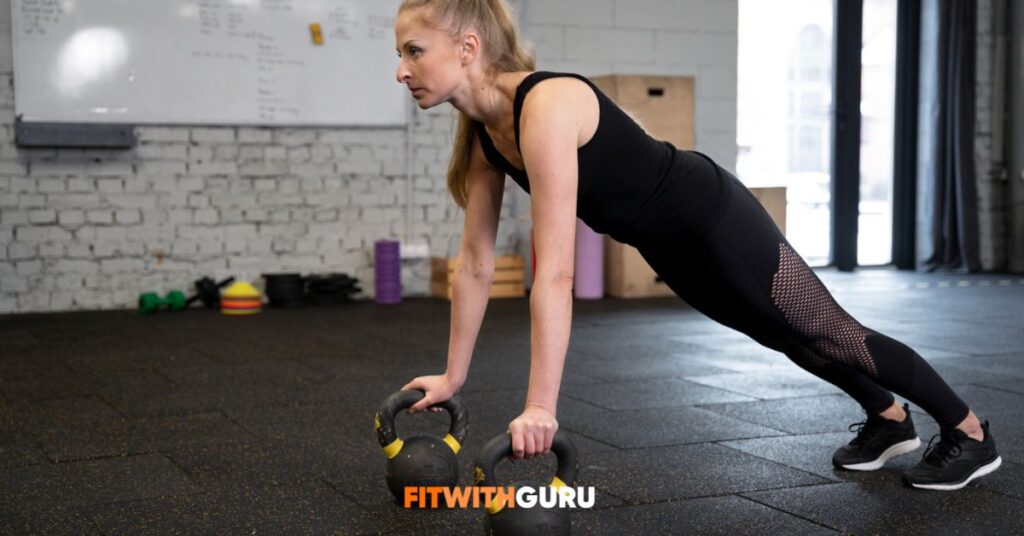
- Renegade rows (plank position alternating rows)
- Dumbbell swings
- Walking lunges with dumbbells
- Dumbbell burpees
This metabolic strategy simultaneously increases strength and maintains an elevated heart rate. You will continue to burn calories for hours after your workout is over thanks to the afterburn effect (EPOC).
Upper Body Dumbbell Routine for Strength
All of the main pressing and pulling muscle groups must be worked in order to increase upper body strength. A well-planned upper body exercise program strikes a balance between vertical and horizontal motions.
Dumbbell Shoulder Press
This overhead exercise strengthens and stabilizes the shoulders.
How to perform:
- Stand with feet shoulder-width apart or sit on a bench with back support
- Hold dumbbells at shoulder height with palms facing forward
- Press both dumbbells overhead until arms are fully extended
- Lower the weights back to shoulder level with control
- Perform 4 sets of 6-8 repetitions
Dumbbell Pullover
This unique exercise targets both chest and back muscles simultaneously.
How to perform:
- Lie perpendicular across a flat bench with only your upper back supported
- Hold one dumbbell with both hands directly above your chest
- Lower the dumbbell behind your head in an arc motion
- Keep a slight bend in your elbows throughout
- Pull the dumbbell back to starting position
- Complete 3 sets of 12-15 repetitions
Lower Body Dumbbell Exercises for Power
Your legs contain the largest muscle groups in your body and require serious attention. Exercise routines with dumbbells can effectively build lower body strength without a barbell.
Bulgarian Split Squat
This single-leg movement develops balance, stability, and unilateral leg strength.
How to perform:
- Stand facing away from a bench with a dumbbell in each hand
- Place the top of your rear foot on the bench behind you
- Keep your front foot far enough forward to maintain balance
- Lower your body until your rear knee nearly touches the ground
- Drive through your front heel to return to starting position
- Perform 3 sets of 10-12 repetitions per leg
Dumbbell Romanian Deadlift
This hip-hinge exercise works your lower back, hamstrings, and glutes.
How to perform:
- Stand with feet hip-width apart holding dumbbells in front of your thighs
- Keep a slight bend in your knees throughout the movement
- Push your hips back while lowering the dumbbells along your legs
- Lower until you feel a stretch in your hamstrings
- Drive your hips forward to return to standing position
- Complete 3 sets of 10-12 repetitions
Creating Your Weekly Dumbbell Training Schedule
When it comes to long-term fitness outcomes, consistency is more important than perfection. You can make sure you’re training consistently without going overboard by creating a sustainable weekly schedule.
3-Day Full-Body Split:
- Monday: Full-body routine A
- Wednesday: Full-body routine B
- Friday: Full-body routine C
4-Day Upper/Lower Split:
- Monday: Upper body
- Tuesday: Lower body
- Thursday: Upper body
- Friday: Lower body
5-Day Body Part Split:
- Monday: Chest and triceps
- Tuesday: Back and biceps
- Wednesday: Shoulders and abs
- Thursday: Legs
- Friday: Full-body conditioning
Rest days are just as important as training days. Instead of during the actual workout, your muscles grow during recovery times.
To attain progressive overload, you should increase the weight, repetitions, or sets every two to three weeks. This continuous challenge prevents plateaus and ensures steady progress.
FAQs
How heavy should my dumbbells be for effective workouts?
Select a weight that will challenge you on the final two to three repetitions while enabling you to perform your target repetitions with correct form. Depending on the exercise, intermediate lifters may use 15–35 pounds, while beginners usually start with 5–15 pounds.
Progressive overload—gradually increasing weight as you gain strength—is the key.
Can I build muscle using only dumbbells without barbells or machines?
Of course! For all skill levels, dumbbells offer enough resistance for muscle growth. Dumbbell-only training phases are a common component of the regimens of professional bodybuilders and athletes.
Dumbbells alone can achieve the progressive overload, adequate protein intake, and proper recovery necessary for muscle growth.
How often should I perform exercise routines with dumbbells each week?
Beginners can get enough rest in between workouts with three to four sessions per week. Intermediate and advanced lifters can train four to six days a week with split routines that target different muscle groups.
For the best recovery, make sure you get at least one full day of rest each week.
What’s better for fat loss—light weights with high reps or heavy weights with low reps?
When paired with a healthy diet, both strategies can aid in fat loss. While circuit-style training with lighter weights burns more calories during the session, heavy weights build muscle that raises your metabolic rate.
The best approach integrates both methods into your weekly schedule.
Do I need an adjustable bench for effective dumbbell workouts?
You can get great results without a bench and dumbbells, but an exercise regimen with them offers more variety. Both standing and lying on the floor can be used for many beneficial exercises.
However, if you’re serious about making the most of your dumbbell training options, investing in an adjustable bench is worthwhile.
