
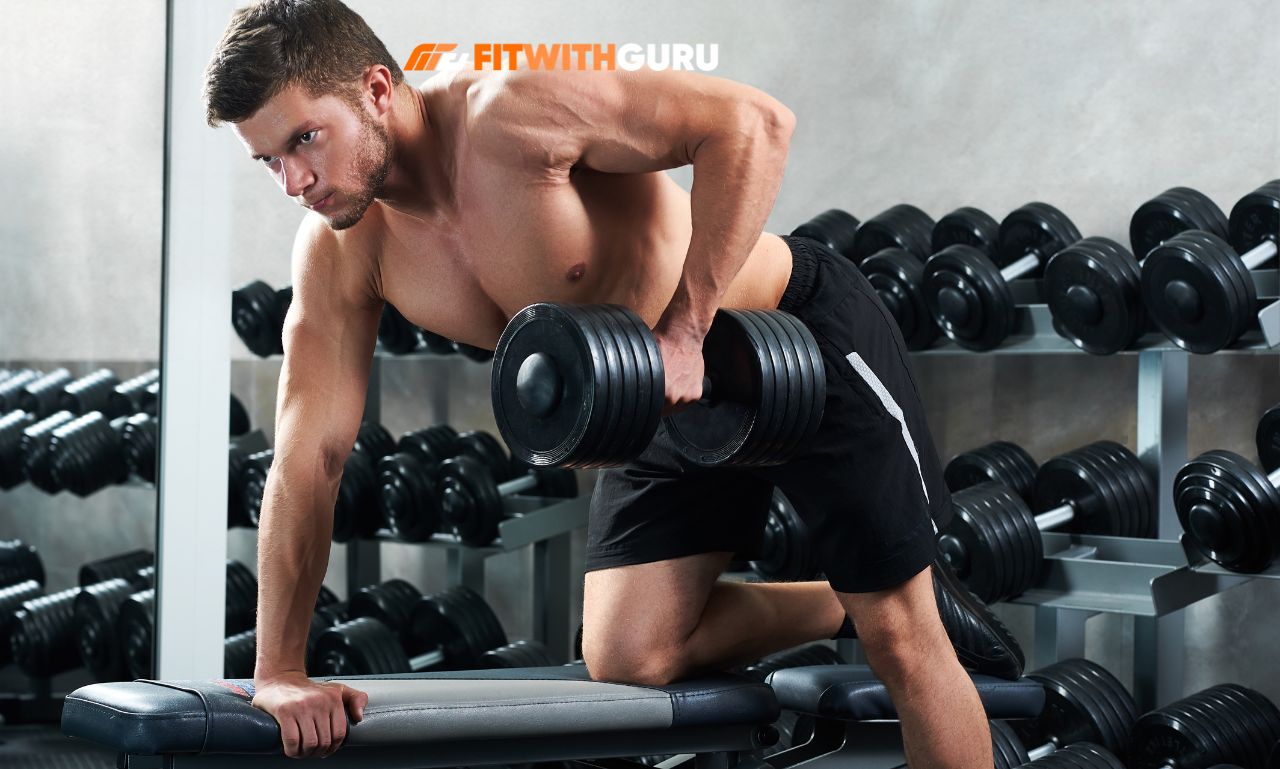
Great dumbbell workouts have transformed the fitness landscape by offering accessible, effective, and versatile training options for people at every fitness level.
Whether you’re working out at home or in a commercial gym, dumbbells provide the foundation for building strength, improving muscle definition, and enhancing overall athletic performance.
These simple yet powerful tools have been used by fitness enthusiasts, athletes, and bodybuilders for decades, proving their effectiveness time and again.
The beauty of dumbbell training lies in its simplicity and adaptability—you can perform hundreds of exercises with just a pair of dumbbells, targeting every major muscle group in your body.
Why Dumbbells Are Essential for Your Fitness Journey
Dumbbells offer unique advantages that other equipment simply cannot match.
Unlike machines that lock you into fixed movement patterns, dumbbells allow natural ranges of motion that accommodate your body’s individual biomechanics.
This freedom of movement activates stabilizer muscles throughout your body, creating a more functional and comprehensive workout experience.
Best dumbbell workouts challenge your coordination, balance, and proprioception while building raw strength and muscle mass.
Another compelling reason to embrace dumbbell training is the unilateral work they enable—you can train one side of your body at a time, identifying and correcting strength imbalances that often develop when using barbells or machines.
Research consistently shows that free-weight exercises, particularly those using dumbbells, elicit greater muscle activation than machine-based movements.
The portability factor cannot be overlooked either—a set of adjustable dumbbells occupies minimal space and travels easily, making consistent training possible regardless of your location or circumstances.
Understanding the Science Behind Dumbbell Training
When you perform good dumbbell workouts, your body engages multiple muscle groups simultaneously, creating what exercise scientists call “compound movements.”
These compound exercises burn more calories, release more growth hormone, and build functional strength that translates directly to real-world activities.
The stabilization requirements of dumbbell exercises activate your core muscles throughout each movement, essentially giving you an ab workout even when targeting other body parts.
Progressive overload—the gradual increase of stress placed on your body during training—becomes straightforward with dumbbells since you can increase weight in small increments as you grow stronger.
This methodical progression prevents plateaus and ensures continuous improvement in strength, muscle size, and endurance over time.
The Complete Upper Body Dumbbell Arsenal
Dumbbell Bench Press
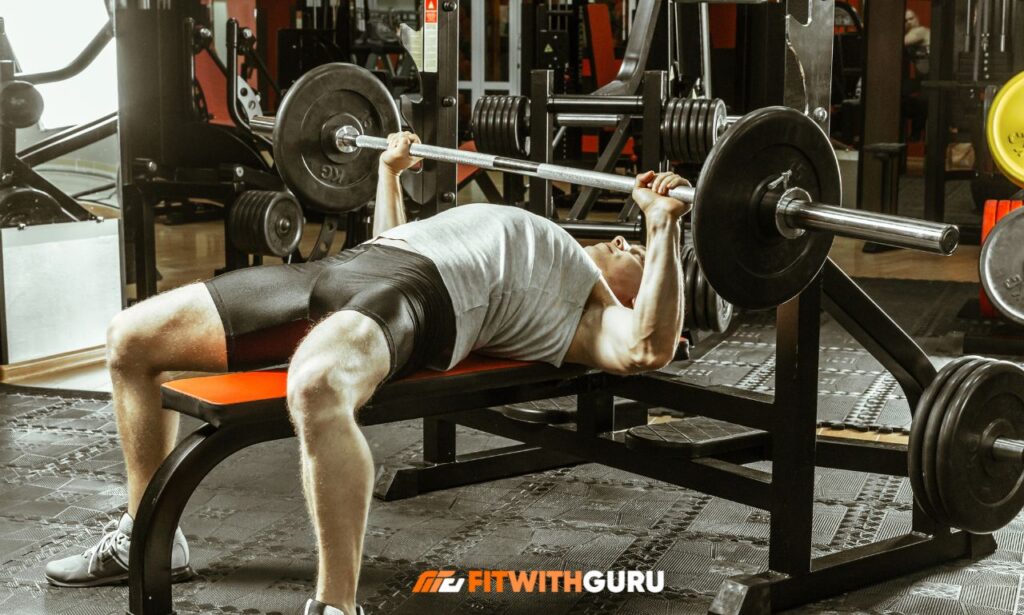
The dumbbell bench press stands as one of the most effective exercises for building chest strength and size.
How to perform:
- Lie flat on a bench with a dumbbell in each hand, positioned at chest level
- Plant your feet firmly on the floor with your shoulder blades retracted
- Press the dumbbells upward until your arms are fully extended
- Lower the weights slowly until they reach chest level, maintaining control
- Keep your elbows at approximately 45 degrees from your torso
This movement allows for a deeper stretch than barbell pressing and reduces shoulder strain by permitting natural hand positioning.
Dumbbell Shoulder Press
This fundamental movement builds powerful, well-rounded shoulders while engaging your core for stability.
How to perform:
- Stand or sit with dumbbells positioned at shoulder height, palms facing forward
- Brace your core and maintain a neutral spine position
- Press the weights overhead until your arms are fully extended
- Lower the dumbbells back to shoulder level with control
- Avoid arching your lower back excessively during the movement
Great dumbbell workouts for beginners should always include overhead pressing movements to develop shoulder strength and stability.
Dumbbell Rows
Rows target your back muscles, including the lats, rhomboids, and traps, while also engaging your biceps and forearms.
How to perform:
- Place one knee and hand on a bench for support
- Hold a dumbbell in your free hand with your arm extended
- Pull the dumbbell toward your hip, keeping your elbow close to your body
- Squeeze your shoulder blade toward your spine at the top
- Lower the weight slowly to the starting position
This unilateral exercise helps correct muscle imbalances between your left and right sides.
Dumbbell Bicep Curls
No arm workout is complete without focused bicep training, and dumbbells excel at isolating these show muscles.
How to perform:
- Stand with dumbbells at your sides, palms facing forward
- Keep your elbows stationary and close to your torso
- Curl the weights toward your shoulders, contracting your biceps
- Squeeze at the top of the movement for maximum muscle engagement
- Lower the weights slowly, resisting gravity throughout the descent
Variations like hammer curls and concentration curls add variety and target different aspects of your arm muscles.
Powerful Lower Body Dumbbell Exercises
Dumbbell Goblet Squats
This squat variation teaches proper form while building leg strength and improving mobility.
How to perform:
- Hold a single dumbbell vertically at chest level with both hands
- Stand with feet slightly wider than shoulder-width apart
- Lower your body by bending at the hips and knees simultaneously
- Keep your chest up and your weight on your heels
- Push through your heels to return to the starting position
Goblet squats serve as excellent great dumbbell workouts for beginners who are learning fundamental movement patterns.
Dumbbell Romanian Deadlifts
This hip-hinge movement targets your hamstrings, glutes, and lower back with incredible efficiency.
How to perform:
- Hold dumbbells in front of your thighs with palms facing your body
- Maintain a slight bend in your knees throughout the movement
- Hinge at your hips, pushing them backward while lowering the weights
- Keep the dumbbells close to your legs as they descend
- Drive your hips forward to return to standing, squeezing your glutes
Mastering the hip hinge pattern through this exercise carries over to countless daily activities and athletic movements.
Dumbbell Lunges
Lunges challenge your balance, coordination, and leg strength while identifying left-right imbalances.
How to perform:
- Hold dumbbells at your sides with arms fully extended
- Step forward with one leg, lowering your hips toward the ground
- Both knees should form approximately 90-degree angles
- Push through your front heel to return to the starting position
- Alternate legs or complete all reps on one side before switching
Walking lunges, reverse lunges, and stationary lunges each offer unique benefits and training stimuli.
Full-Body Dumbbell Movements for Maximum Efficiency
Dumbbell Thrusters
This explosive compound movement combines a front squat with an overhead press, creating a metabolic firestorm.
How to perform:
- Hold dumbbells at shoulder height with palms facing each other
- Perform a full front squat, maintaining upright torso position
- As you drive upward from the squat, press the weights overhead
- Use the momentum from your legs to assist the overhead press
- Lower the weights back to shoulders and repeat
Thrusters exemplify the best dumbbell workouts for burning calories and building full-body conditioning.
Dumbbell Clean and Press
This athletic movement develops explosive power, coordination, and total-body strength.
How to perform:
- Start with dumbbells at your sides or just below knee level
- Explosively extend your hips and pull the weights to shoulder height
- Catch the dumbbells at your shoulders in a quarter squat position
- Stand fully upright, then press the weights overhead
- Lower the weights back to the starting position with control
Learning proper technique on this exercise requires patience but delivers tremendous functional fitness benefits.
Core-Focused Dumbbell Exercises
Dumbbell Russian Twists
This rotational movement targets your obliques while challenging your entire core, making it a highly effective exercise for strengthening and toning your midsection.
How to perform:
- Sit on the floor holding a dumbbell with both hands at chest level
- Lean back slightly and lift your feet off the ground
- Rotate your torso to one side, moving the dumbbell across your body
- Return to center, then rotate to the opposite side
- Maintain steady breathing throughout the movement
Core strength developed through exercises like this translates directly to improved performance in all other lifts.
Dumbbell Woodchoppers
This dynamic exercise mimics functional movement patterns while sculpting your entire midsection.
How to perform:
- Hold one dumbbell with both hands at shoulder height
- Rotate and lower the weight diagonally across your body
- Pivot your feet and engage your core throughout the movement
- Return to the starting position with control
- Complete all reps on one side before switching directions
Good dumbbell workouts incorporate rotational movements that train your body for real-world activities.
Creating Your Personalized Dumbbell Workout Program
| Fitness Goal | Workout Frequency | Rep Range | Sets Per Exercise |
| Muscle Building | 4-5 days/week | 8-12 reps | 3-4 sets |
| Strength Development | 3-4 days/week | 4-6 reps | 4-5 sets |
| Fat Loss | 4-6 days/week | 12-15 reps | 2-3 sets |
| Endurance | 3-5 days/week | 15-20 reps | 2-3 sets |
Your individual goals, experience level, and recovery capacity should guide your program design decisions.
Beginners should start with two to three full-body workouts per week, allowing at least one day of recovery between sessions.
Intermediate and advanced lifters can use upper/lower splits, push/pull/legs routines, or body-part splits, depending on their preferences and schedules. For those looking to strengthen their upper body, including chest, triceps, and shoulders, incorporating a dip bar workout can be highly effective.
Progressive Overload Strategies for Continuous Gains
Simply showing up and going through the motions will not produce optimal results—you must progressively challenge your body.
The most straightforward progression method involves gradually increasing the weight you lift as exercises become easier.
You can also increase training volume by adding sets, reps, or additional exercises targeting the same muscle groups.
Reducing rest periods between sets increases workout density and metabolic stress, both of which stimulate adaptation.
Improving exercise technique—achieving deeper ranges of motion, better muscle control, and stricter form—represents another powerful progression strategy. This approach not only improves performance but also helps reduce the risk of injury, especially for athletes dealing with knee stress. Practicing targeted movements such as these jumper’s knee exercises can support stronger tendons and better knee stability during training.
Great dumbbell workouts challenge you consistently, forcing adaptation that results in stronger, more capable physique.
Common Mistakes to Avoid in Dumbbell Training
Using excessive weight that compromises form represents the most prevalent error among lifters of all experience levels.
Quality movement patterns trump heavy loads—proper technique ensures safety, maximizes muscle activation, and prevents injury.
Neglecting unilateral exercises leaves strength imbalances unaddressed, potentially leading to compensatory movement patterns and eventual injury.
Training the same exercises with identical set and rep schemes for months on end leads to plateaus and stagnation.
Best dumbbell workouts incorporate periodization—systematic variation in training variables to optimize long-term progress.
Inadequate warm-up preparation increases injury risk and limits performance potential during your training session.
Spend five to ten minutes performing dynamic movements, light cardio, and activation exercises before loading your muscles with heavy weights. Including mobility-focused drills and exercises for suppleness can help improve flexibility, increase joint range of motion, and better prepare your body for the workout ahead.
People Also Ask
How heavy should dumbbells be for beginners starting great dumbbell workouts?
Beginners should select weights that allow them to complete 12-15 repetitions with good form while feeling challenged during the last few reps. For most exercises, men typically start with 10-20 pound dumbbells, while women often begin with 5-15 pound weights, though individual strength varies considerably.
The key is choosing weights that match your current fitness level rather than your ego—starting too heavy compromises form and increases injury risk. Adding mobility work like exercises for suppleness to your routine can also help improve flexibility and joint movement, making it easier to maintain proper form during strength training.
Can you build significant muscle using only dumbbell exercises?
Absolutely—countless individuals have built impressive physiques using primarily or exclusively dumbbell training. The key factors for muscle growth are progressive overload, adequate training volume, proper nutrition, and sufficient recovery time. Dumbbells provide all the resistance needed to stimulate muscle growth across your entire body when used strategically. You can also combine strength training with targeted movements like bodyweight quad exercises to further develop lower-body strength and muscular endurance.
How often should I perform good dumbbell workouts each week?
Most people achieve excellent results training three to five days per week, depending on their program structure and recovery capacity. Beginners benefit from three full-body sessions weekly, while more advanced lifters might train four to six days using split routines. If you’re just starting out, following a structured beginner workout program for women can help build consistency and proper training habits. Listen to your body—adequate recovery between sessions is just as important as the training itself for making progress.
What weight dumbbells should I buy for home workouts?
Adjustable dumbbells that range from 5 to 50 pounds per hand offer the best versatility for home training. Alternatively, purchasing several pairs of fixed-weight dumbbells (light, medium, and heavy) covers most exercise needs. Your selection should accommodate both isolation exercises requiring lighter weights and compound movements demanding heavier loads. To structure your training effectively, you can also follow a 5-day gym workout schedule for men that balances different muscle groups and recovery days.
Are great dumbbell workouts for beginners different from advanced routines?
Beginners should focus on mastering fundamental movement patterns with moderate weights and higher repetitions (10–15 reps). Advanced lifters can incorporate more complex exercises, heavier loads, lower rep ranges, and sophisticated programming techniques. However, the basic exercises remain valuable regardless of experience level—execution quality and progressive overload matter more than exercise complexity. To learn more about our training philosophy and approach to fitness education, visit our About Us page.
Conclusion
Great dumbbell workouts provide everything you need to build strength, increase muscle mass, improve athletic performance, and enhance overall fitness. The versatility, accessibility, and effectiveness of dumbbell training make it suitable for everyone from complete beginners to elite athletes.
By incorporating the exercises and principles outlined in this guide, you can create comprehensive training programs that deliver consistent results over time. Remember that success in fitness comes from consistent effort, intelligent programming, proper nutrition, and adequate recovery.
Start implementing these best dumbbell workouts today, focus on progressive improvement, and watch as your body transforms week by week. The journey of a thousand miles begins with a single step—or in this case, a single rep with a pair of dumbbells at FitWithGuru.
