
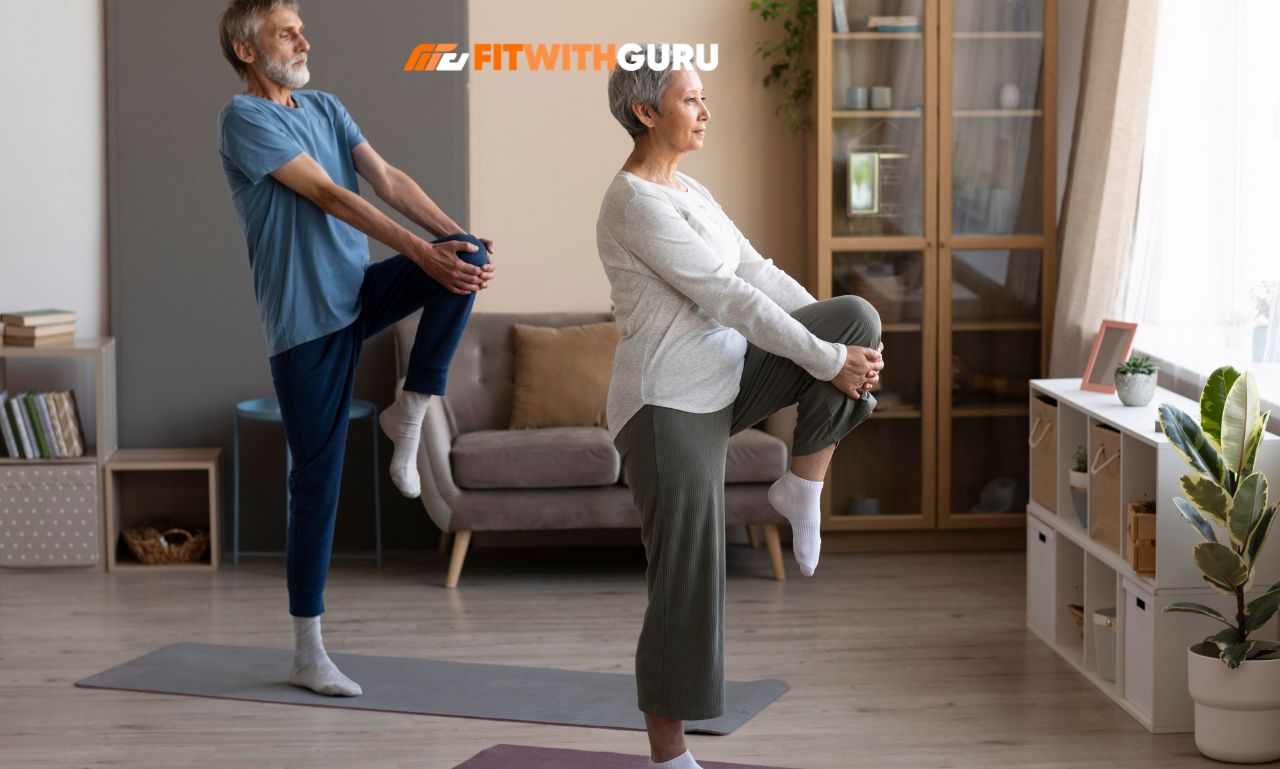
Leg-strengthening exercises for elderly individuals are essential for maintaining independence, preventing falls, and improving overall quality of life as we age.
As we age, our leg muscles naturally lose mass and strength, a condition called sarcopenia that affects nearly 30% of people over 60.
The good news is that leg-strengthening exercises can reverse this decline, helping seniors maintain their mobility, balance, and independence well into their golden years.
Why Leg Strength Matters for Seniors
Your legs are literally the foundation that keeps you moving through life, and maintaining their strength becomes increasingly critical after age 60.
Strong leg muscles support essential daily activities like walking to the mailbox, getting up from a chair, climbing stairs, and even standing long enough to prepare a meal.
When you invest time in leg-strengthening exercises, you’re not just building muscle; you’re building confidence and extending your years of independent living.
Safety Considerations Before Starting
Before beginning any leg-strengthening exercises for elderly routines, consulting with your healthcare provider is essential.
Your doctor can assess any existing conditions like arthritis, osteoporosis, heart disease, or previous injuries that might require exercise modifications.
Start slowly and listen to your body; pain is your body’s warning signal that something isn’t right, so never push through sharp or persistent discomfort.
Proper form matters more than the number of repetitions, because incorrect technique can lead to injuries that set back your progress for weeks or months.
Always warm up with 5-10 minutes of gentle movement like marching in place or ankle circles to prepare your muscles and joints.
Keep water nearby to stay hydrated, wear supportive footwear with good traction, and perform exercises in a safe environment free from tripping hazards.
Top 5 Leg Strengthening Exercises for Elderly
1. Chair Squats: The Foundation Builder
Chair squats are arguably the most functional leg strengthening exercises for elderly individuals because they directly mimic the sitting and standing motion you perform dozens of times daily.
This exercise targets your quadriceps, hamstrings, glutes, and core muscles, making it a comprehensive lower-body strengthener.

How to Perform:
- Place your feet hip-width apart and stand in front of a firm chair.
- Keep your toes pointing slightly outward
- Slowly lower yourself toward the chair as if you’re about to sit
- Maintain your knees behind your toes and your weight on your heels.
- Lightly touch the chair with your buttocks without fully sitting down
- To get back to standing, push through your heels.
- Start with 8-10 repetitions for 2 sets
The beauty of this exercise is its adaptability—beginners can actually sit down fully and practice standing up, while advanced practitioners can lower themselves more slowly or add a brief hold at the bottom position.
2. Heel Raises: Building Calf Strength and Balance
Heel raises are simple yet powerful leg strengthening exercises for elderly at home that require nothing more than a stable surface for support.
Strong calf muscles are crucial for walking, climbing stairs, and maintaining balance, yet they’re often overlooked in senior fitness routines.
How to Perform:
- Stand behind a sturdy chair or counter
- Hold lightly for balance support with your feet hip-width apart
- Slowly rise up onto your toes as high as comfortable
- Hold for 2-3 seconds at the top
- Lower back down with control
- Perform 12-15 repetitions for 2-3 sets
- Rest 30-60 seconds between sets
This exercise not only strengthens your calf muscles but also improves ankle stability and proprioception—your body’s awareness of its position in space.
3. Leg Extensions: Targeting the Quadriceps
Leg extensions are excellent leg strengthening exercises that specifically target the quadriceps muscles at the front of your thighs, which are essential for walking and standing.
These muscles often weaken significantly with age, making activities like climbing stairs or getting out of a car increasingly difficult.
How to Perform:
- Sit in a sturdy chair with your back supported
- Keep your feet flat on the floor initially
- Grip the sides of the chair for stability
- Slowly straighten one leg until it’s parallel to the floor
- Hold for 3-5 seconds at the top
- Lower it back down with control
- Complete 10-12 repetitions on each leg for 2-3 sets
- Alternate between legs or complete all reps on one side before switching
This seated exercise is particularly beneficial for those with balance concerns or who find standing exercises challenging.
4. Side Leg Raises: Strengthening Hip Abductors
Side leg raises target the hip abductor muscles along the outer thighs, which are critical for lateral stability and preventing falls when you step sideways or lose balance.
These leg strengthening exercises for elderly individuals are particularly important because weak hip abductors are strongly associated with increased fall risk.
How to Perform:
- Stand behind a chair, holding it with both hands for support
- Keep your feet together and maintain tall posture
- Keep your toes pointing forward and your leg straight
- Slowly lift one leg out to the side 6-12 inches
- Hold for 2 seconds at the top
- Lower with control
- Complete 10-15 repetitions on each side for 2-3 sets
- Ensure you don’t lean your upper body to the side as you lift
.The movement should come entirely from the hip joint, not from tilting your torso or rotating your leg
5. Marching in Place: Dynamic Strength and Coordination
Marching in place combines leg strengthening with cardiovascular benefits and dynamic balance training, making it one of the most comprehensive leg-strengthening exercises for elderly at home.
This functional movement improves hip flexor strength and coordination and can serve as both a warm-up and a standalone strengthening exercise.

How to Perform:
- Stand behind or beside a chair for balance support
- Maintain tall posture with shoulders back and core engaged
- Lift one knee as high as comfortable (ideally to hip height).
- Hold briefly at the top
- Lower it and immediately lift the other knee.
- Continue alternating legs in a controlled marching motion
- Continue for 30-60 seconds
- Complete 2-3 sets
Focus on lifting your knees rather than just shuffling your feet, as higher knee lifts provide better strengthening benefits.
Creating Your Weekly Exercise Routine
Consistency is the secret ingredient that transforms leg-strengthening exercises for elderly individuals from occasional activities into life-changing habits.
Try to do these exercises three to four times a week, giving your muscles at least one day off in between.
Each session should take approximately 20–30 minutes, including a 5-minute warm-up and a 5-minute cool-down period.
| Day | Activity | Duration |
|---|---|---|
| Monday | Full leg strengthening routine | 25-30 minutes |
| Tuesday | Light walking or rest | 15-20 minutes |
| Wednesday | Full leg strengthening routine | 25-30 minutes |
| Thursday | Gentle stretching or rest | 15 minutes |
| Friday | Full leg strengthening routine | 25-30 minutes |
| Saturday | Light activity or rest | Optional |
| Sunday | Rest or gentle stretching | Optional |
Start conservatively with lower repetitions and sets, then gradually increase intensity every 2-3 weeks as your strength improves.
Common Mistakes to Avoid
Even the best leg strengthening exercises for elderly individuals lose their effectiveness when performed incorrectly or inconsistently.
One of the most common mistakes is rushing through movements without proper control—slow, deliberate motions build strength more effectively and reduce injury risk.
Many seniors hold their breath during exercises, which can cause dizziness and blood pressure spikes; remember to breathe steadily throughout each movement.
Skipping the warm-up is tempting when time is short, but cold muscles are more prone to strains and pulls.
Overdoing it too soon is another frequent pitfall—enthusiasm is wonderful, but your body needs time to adapt to new physical demands.
Poor posture during exercises not only reduces their effectiveness but can also strain your back and neck unnecessarily.
Inconsistency is perhaps the biggest obstacle to progress—exercising sporadically provides minimal benefits compared to a regular, sustainable routine.
FAQs
How long does it take for leg strengthening exercises to show results?
Most seniors notice improved stability and reduced fatigue during daily activities within 3-4 weeks of consistent leg-strengthening exercises as part of their routine.
Measurable strength gains typically become apparent after 6-8 weeks, while significant muscle growth and functional improvements usually require 12-16 weeks of regular practice.
Consistency matters more than intensity; exercising three times weekly with proper form produces better results than sporadic intense workouts.
Can I do these exercises if I have arthritis or joint pain?
Yes, leg strengthening exercises for elderly individuals with arthritis can actually reduce joint pain and improve function when performed correctly.
Start with lower repetitions and avoid movements that cause sharp pain, though some mild discomfort as muscles adapt is normal.
Exercises performed in a seated position or with support typically work best for those with significant arthritis, placing less stress on affected joints.
Always consult your doctor or physical therapist before starting, as they may recommend specific modifications based on which joints are affected.
What if I can’t complete the recommended number of repetitions?
Starting with fewer repetitions than recommended is perfectly fine—begin where you are and gradually build up as your leg strengthening exercises for elderly at home routine continues.
If 10 repetitions feels overwhelming, start with 5 or even 3, focusing on proper form rather than quantity.
As your strength improves over weeks, you’ll naturally be able to complete more repetitions, and this progressive improvement itself becomes a powerful motivator.
How do I know if I’m doing the exercises correctly?
Working with a physical therapist or certified senior fitness instructor for even 1-2 sessions can ensure you learn proper form for leg strengthening exercises.
Recording yourself with a smartphone and comparing your form to instructional videos helps identify technique issues.
Exercises should feel challenging in the muscles being worked but never cause sharp pain in joints or create balance issues that feel unsafe.
Can these exercises help prevent falls?
Absolutely—leg strengthening exercises for elderly individuals are one of the most effective fall prevention strategies, reducing fall risk by 30-40%, according to research.
Stronger leg muscles provide better stability, quicker reflexes to catch yourself when you trip, and greater confidence in movement, preventing the fearful, tentative walking that actually increases fall risk.
Combining leg strengthening with balance exercises provides even greater fall-prevention benefits than either approach alone.
Conclusion
Leg-strengthening exercises for elderly individuals are among the most impactful investments you can make in your long-term health, independence, and quality of life.
The five exercises outlined in this guide—chair squats, heel raises, leg extensions, side leg raises, and marching in place—provide a comprehensive approach to building lower-body strength safely and effectively.
Starting these leg strengthening exercises for elderly at home requires no expensive gym membership or complicated equipment, just commitment to your own well-being and 20-30 minutes three times weekly.
Whether you’re currently struggling with stairs, worried about falling, or simply want to maintain your independence as you age, these exercises offer a proven path forward.
