
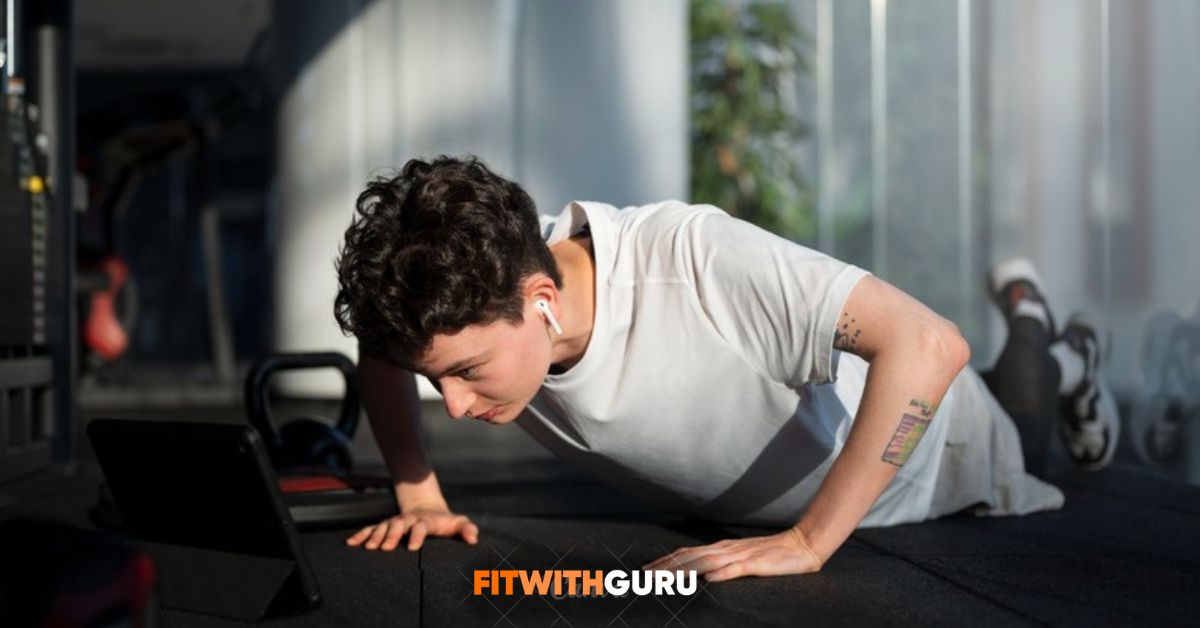
A mens calisthenics workout plan is the foundation for building strength, muscle, and endurance using nothing but your bodyweight.
Whether you’re a complete beginner or an experienced athlete looking to switch up your training routine, calisthenics offers a practical, accessible, and highly effective approach to fitness that can be done anywhere, anytime.
This comprehensive guide will walk you through everything you need to know about creating and following an effective mens calisthenics workout plan that delivers real results.
Why Calisthenics Works Best for Men
Calisthenics training has gained massive popularity among men because it addresses multiple fitness goals simultaneously.
When you follow a structured mens calisthenics workout, you’re not just building muscle—you’re developing coordination, balance, flexibility, and body control that goes far beyond what you’d achieve with isolated machine exercises.
Men particularly benefit from calisthenics because it builds functional strength that enhances athletic performance in sports, daily activities, and other physical pursuits.
The compound movements in a mens calisthenics workout plan engage multiple muscle groups simultaneously, leading to better hormonal responses and more efficient muscle growth.
Another advantage is the minimal risk of injury when compared to heavy weightlifting, as you’re working within your body’s natural range of motion and capabilities.
Calisthenics also promotes better joint health, improves posture, and creates a lean, athletic physique rather than bulky muscle mass.
Perhaps most importantly, you can perform your mens calisthenics workout anywhere—at home, in a park, while traveling, or even in a hotel room—eliminating excuses and making consistency easier to maintain.
Essential Exercises Every Man Should Master
Every effective mens calisthenics workout plan is built around fundamental movement patterns that target all major muscle groups.
Push-ups are the cornerstone of any mens calisthenics workout, targeting the chest, shoulders, and triceps while engaging the core for stability.
Standard push-ups, wide-grip push-ups, diamond push-ups, and decline push-ups offer progression options as you get stronger.
Pull-ups and chin-ups are essential upper body exercises that build back width and thickness while strengthening your biceps and grip.
If you can’t perform full pull-ups yet, start with negative pull-ups, assisted variations, or inverted rows until you build sufficient strength.
Dips are powerful tricep and chest builders that can be performed on parallel bars, sturdy chairs, or any elevated surface.
Squats and lunges form the foundation of lower body training in your mens calisthenics workout, developing leg strength, power, and endurance.
Planks and leg raises are core-strengthening essentials that improve stability and protect your spine during more advanced movements.
Building Your Mens Calisthenics Workout Structure
Creating an effective mens calisthenics workout plan requires thoughtful programming that balances training frequency, volume, and recovery.
Most men see excellent results training 3-5 times per week, allowing adequate rest between sessions for muscle recovery and growth.
A popular approach is the push-pull-legs split, where you dedicate separate days to pushing movements (push-ups, dips), pulling movements (pull-ups, rows), and leg exercises (squats, lunges).
This structure ensures balanced development and prevents overtraining specific muscle groups.
For beginners, a full-body routine performed 3 times weekly provides excellent results while allowing ample recovery time.
Each training session in your mens calisthenics workout should last 45-60 minutes, including warm-up and cool-down periods.
Start every workout with 5-10 minutes of dynamic stretching and joint mobility work to prepare your body and reduce injury risk.
Your main workout should consist of 4-6 exercises performed for 3-4 sets each, with rep ranges adjusted based on your goals and current fitness level.
For strength development, aim for 4-8 reps of challenging variations; for muscle building, target 8-15 reps; for endurance, perform 15-30 reps.
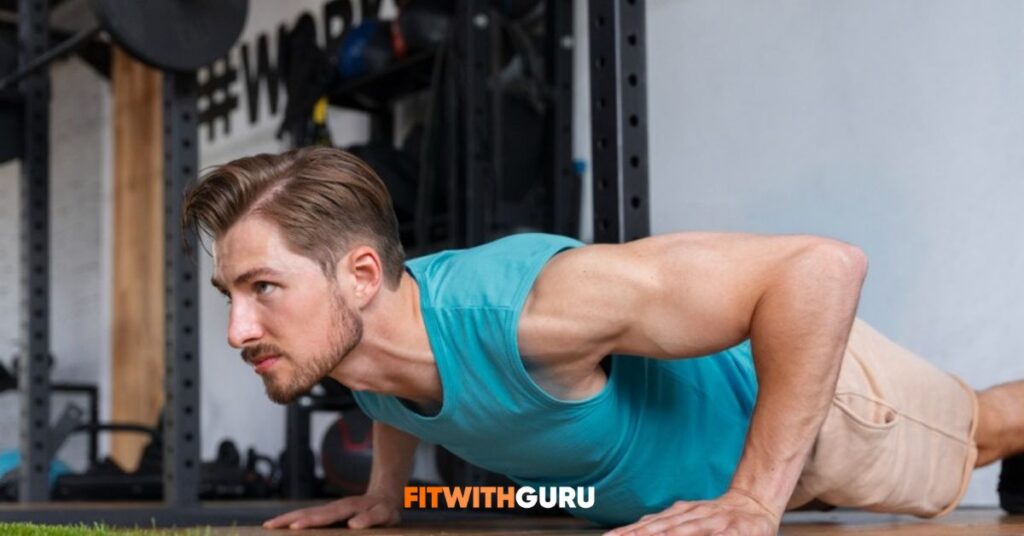
Beginner Mens Calisthenics Workout Plan
If you’re new to bodyweight training, this foundational mens calisthenics workout plan will build the strength base you need for more advanced movements.
Monday – Full Body:
- Push-ups: 3 sets of 8-12 reps
- Inverted rows: 3 sets of 6-10 reps
- Bodyweight squats: 3 sets of 15-20 reps
- Plank: 3 sets of 30-45 seconds
- Glute bridges: 3 sets of 12-15 reps
Wednesday – Full Body:
- Incline push-ups: 3 sets of 10-15 reps
- Assisted pull-ups: 3 sets of 5-8 reps
- Lunges: 3 sets of 10 reps per leg
- Side plank: 3 sets of 20-30 seconds per side
- Calf raises: 3 sets of 15-20 reps
Friday – Full Body:
- Diamond push-ups: 3 sets of 6-10 reps
- Australian pull-ups: 3 sets of 8-12 reps
- Bulgarian split squats: 3 sets of 8-12 reps per leg
- Hollow body hold: 3 sets of 20-30 seconds
- Wall sits: 3 sets of 30-45 seconds
This beginner mens calisthenics workout focuses on building proper form and establishing consistency before advancing to more challenging variations.
Intermediate Mens Calisthenics Workout Plan
Once you’ve mastered the basics and can perform standard push-ups, pull-ups, and squats with good form, it’s time to advance your mens calisthenics workout.
Monday – Push Day:
- Regular push-ups: 4 sets of 15-20 reps
- Pike push-ups: 3 sets of 10-12 reps
- Parallel bar dips: 3 sets of 8-12 reps
- Pseudo planche push-ups: 3 sets of 6-8 reps
Wednesday – Pull Day:
- Pull-ups: 4 sets of 8-12 reps
- Chin-ups: 3 sets of 8-10 reps
- Wide grip pull-ups: 3 sets of 6-8 reps
- Horizontal rows: 3 sets of 12-15 reps
Friday – Legs & Core:
- Jump squats: 4 sets of 12-15 reps
- Pistol squat progressions: 3 sets of 5-8 reps per leg
- Nordic curls: 3 sets of 5-8 reps
- Hanging leg raises: 4 sets of 10-15 reps
- L-sit holds: 4 sets of 15-30 seconds
This intermediate mens calisthenics workout plan introduces more challenging variations and begins incorporating skill work.
How to Perform Key Exercises Correctly
Proper form is crucial in any mens calisthenics workout to maximize results and prevent injuries.
Push-ups
- Start in a high plank position with hands directly under shoulders, body forming a straight line.
- Engage your core by pulling your belly button toward your spine.
- Keep elbows at approximately 45 degrees from your body as you lower down.
- Lower your chest until it’s 1-2 inches from the ground. Press through your hands to return to starting position.
- Maintain neutral spine throughout—don’t let hips sag or pike upward. Breathe in as you lower, breathe out as you push up.
Pull-ups
- Hang from a bar with palms facing away, hands slightly wider than shoulder-width.
- Start from a dead hang with arms fully extended and shoulders engaged.
- Pull yourself up by driving elbows down and back, keeping chest up.
- Continue pulling until the chin clears the bar. Control the descent back to full extension.
- Avoid swinging or using momentum—keep the movement strict. Engage your core to prevent excessive arching.
Squats
- Stand with feet shoulder-width apart, toes pointing slightly outward.
- Keep chest proud and core engaged throughout the movement.
- Initiate the squat by pushing hips back as if sitting into a chair.
- Lower until thighs are at least parallel to the ground.
- Keep knees tracking over toes—don’t let them cave inward.
- Drive through the entire foot to stand back up, squeezing glutes at the top. Keep weight balanced across the entire foot.
Progressive Overload Strategies
Understanding progressive overload is essential for continuous improvement in your mens calisthenics workout plan.
Since you can’t simply add weight plates like in the gym, calisthenics progressive overload requires creative approaches.
Increase reps: The most straightforward method—if you can do 10 push-ups, work toward 15, then 20.
Decrease rest periods: Reducing rest between sets increases workout intensity and challenges your cardiovascular system.
Improve range of motion: Deeper squats, chest-to-bar pull-ups, and deficit push-ups increase difficulty without changing the exercise.
Slow down tempo: Performing exercises with controlled 3-4 second lowering phases dramatically increases time under tension.
Progress to harder variations: Moving from regular push-ups to diamond push-ups to one-arm push-ups provides continual challenge.

FAQs
How long does it take to see results from a mens calisthenics workout plan?
Most men notice initial strength improvements within 2-3 weeks and visible physical changes within 4-6 weeks of consistent training.
However, significant transformations typically require 3-6 months of dedicated effort, while advanced skills like muscle-ups may take 6-12 months or longer depending on your starting point.
The key is consistency—following your mens calisthenics workout plan 3-5 times weekly with proper nutrition will accelerate results.
Can you build muscle with just calisthenics or do you need weights?
Absolutely—calisthenics can build substantial muscle mass when programmed correctly with progressive overload.
Your muscles don’t know whether resistance comes from barbells or bodyweight; they only respond to tension, metabolic stress, and muscle damage.
Many calisthenics athletes have impressive physiques built entirely through bodyweight training by continuously progressing to harder variations and optimizing nutrition.
How often should I train with a mens calisthenics workout plan?
Most men achieve optimal results training 3-5 times per week, allowing at least one rest day between sessions for the same muscle groups.
Beginners typically start with 3 full-body sessions weekly, while intermediate trainees often follow 4-5 day splits that separate push, pull, and leg movements.
Listen to your body—adequate recovery is when muscles actually grow, so more isn’t always better.
Do I need any equipment for a mens calisthenics workout?
While many exercises require no equipment at all, having access to a pull-up bar significantly expands your training options.
Parallel bars or dip stations are beneficial but optional, as you can use sturdy chairs, countertops, or playground equipment as alternatives.
The beauty of a mens calisthenics workout is its minimal equipment requirements—you can get an excellent workout almost anywhere.
Can older men follow a calisthenics workout plan safely?
Calisthenics is excellent for men of all ages because it’s naturally self-limiting—you work within your current capabilities.
Older men should start conservatively, focusing on form over intensity, and may need longer recovery periods between sessions.
The low-impact nature of bodyweight training is generally easier on joints than heavy weightlifting, making it ideal for long-term fitness.
Conclusion
A well-structured mens calisthenics workout plan offers men a sustainable, effective, and accessible path to building strength, muscle, and overall fitness without expensive gym memberships or complicated equipment.
By mastering fundamental movements, applying progressive overload principles, and maintaining consistency, you can achieve impressive physical transformations and functional strength that enhances every aspect of your life.
Whether you’re just beginning your fitness journey or looking to take your training to advanced levels, calisthenics provides a scalable system that grows with you.
Start with the beginner mens calisthenics workout plan outlined here, track your progress, and gradually advance to more challenging variations as your strength improves.
Your body is the most versatile training tool you’ll ever own—learn to master it through dedicated calisthenics training and unlock your full physical potential with FitWithGuru.
